Contemplations on Spirit
'In this blog I contemplate the means to understand one self and the motivation that moves us to unfold in heart and soul.'
The Story of
Solomon with Jung,
The Peaceful One
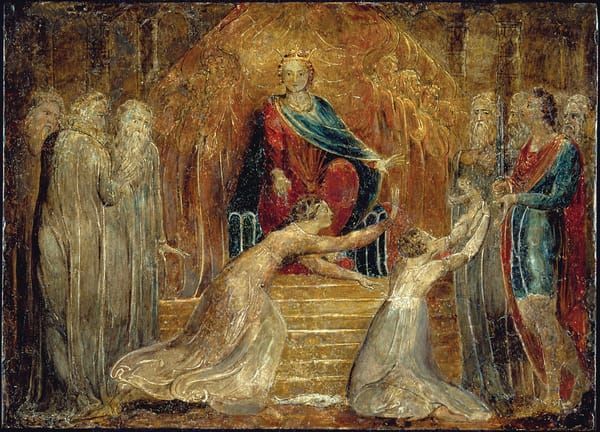
I first heard this story during my studies at the Academie voor Toegepaste Astrologie in Amstelveen. Two women, one living child, a king who asks for a sword. It is one of those stories you think you know before you have ever heard it. And yet it stayed with me.
Only years later did I understand why.
I recognize myself in both mothers: in the lost contact with one's own inner child, and in the capacity to let go rather than watch the child be cut in two.
This piece is about Solomon. About the judgment, about the pillars of his temple, and about what it means to belong.
A king born from the shadow
Solomon's story does not begin with him, but with a deed of his father. King David sees Bathsheba, the wife of his soldier Uriah. He takes her and has Uriah killed in the front line of battle. The first child of David and Bathsheba dies. The second becomes Solomon, Shlomo, the peaceful one. The prophet Nathan gives him a second name: Jedidiah, beloved of God.
So the wisest king comes forth from his father's deepest guilt. From a Jungian perspective, that is no coincidence. What the parents have not worked through becomes the task of the child. The Self, the image of wholeness in the psyche, rarely grows from what is pure. It grows from what is broken and asks to be mended. Solomon does not inherit peace. He inherits the task of becoming it.
A listening heart
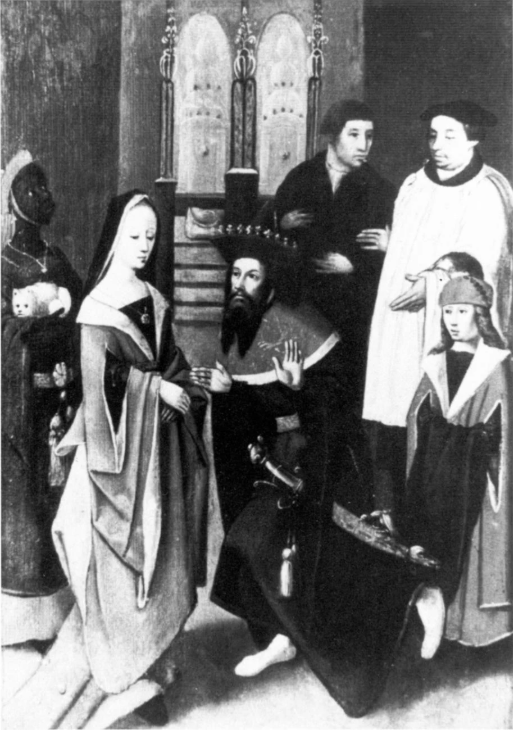
As a young king, Solomon goes to Gibeon to make offerings. At night God appears to him in a dream: ask what I shall give you. Solomon does not ask for long life, nor riches, nor victory over his enemies. He says he is still young and does not know how to lead. He asks for a lev shomea: a listening heart, to discern between good and evil.
Psychologically, this is the most important moment of the story. The ego, newly on the throne, turns to the dream, to the unconscious, and asks not for control but for receptivity. Wisdom begins here not as knowing, but as hearing. The rabbinic commentaries note that the judgment of the two mothers follows that very same day. The gift is put to the test at once.
The sword that does not cut
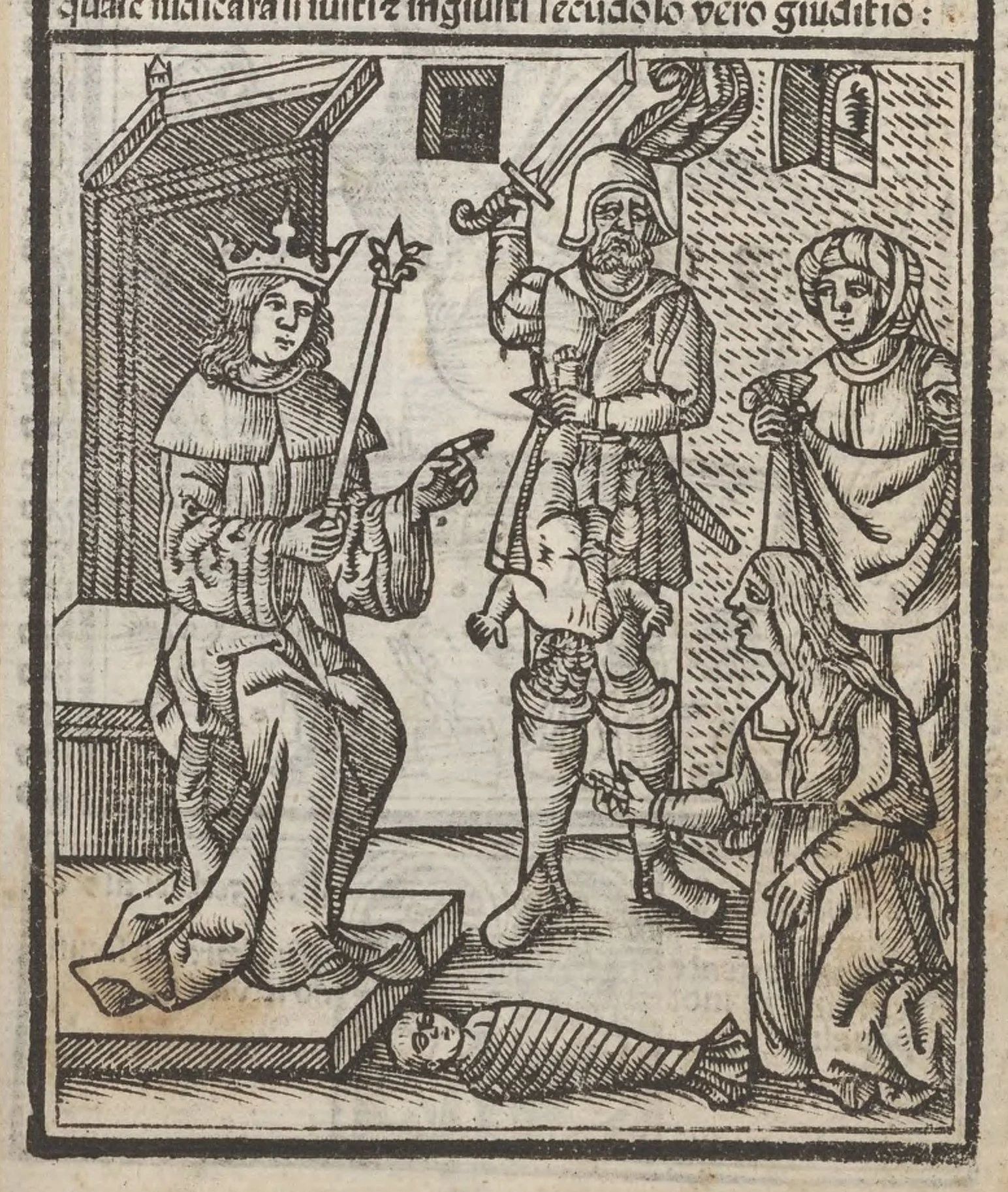
Two women come before the king. They live together in one house and each gave birth to a son, a few days apart. One night one of the children died: his mother had lain on him in her sleep. Now they stand before Solomon and both say the same thing: my son lives, yours is dead. There is no witness. There is no proof.
Solomon asks for a sword. Cut the living child in two, he says, and give each of them half.
Then the heart of one woman breaks. Give her the child alive, she pleads, but do not kill it. The other says: neither mine nor yours, cut it in two. Solomon gives the child to the first. She is his mother.
The Church Father Ambrose wrote that this sword was not meant to pierce the body, but to lay bare the hidden feeling. It is the sword of discernment, the Logos. But the sword alone decides nothing. Of the true mother, the Hebrew text says that her rachamim were stirred: her compassion. That word is related to rechem, the womb. Compassion literally lives in the womb. Solomon's wisdom is the collaboration of sword and womb, of Logos and Eros. One without the other is cruelty, or blindness.
Two mothers
It is tempting to read the two women as good and evil. But they are also two faces of the same archetypal mother: the loving one and the possessive one. One wants the child to live, even if it is no longer with her. The other mostly wants the other woman not to have it.
Notice how the first child died. Not through malice, but in sleep.
Unconsciousness kills new life. And notice what the second woman chooses when she is about to lose: the split. Neither mine nor yours. Psychologically, that is the path of dissociation: rather a whole cut in two than a living whole in someone else's arms.
The true mother does the opposite. She sacrifices her claim. And precisely through that she is recognised. Not her proof, not her words, but her refusal to let the child be broken makes her the mother.
I do not write this as someone looking on from a distance. Anyone who loses a child while that child is alive knows that love does not end there. It changes form.
Between the pillars
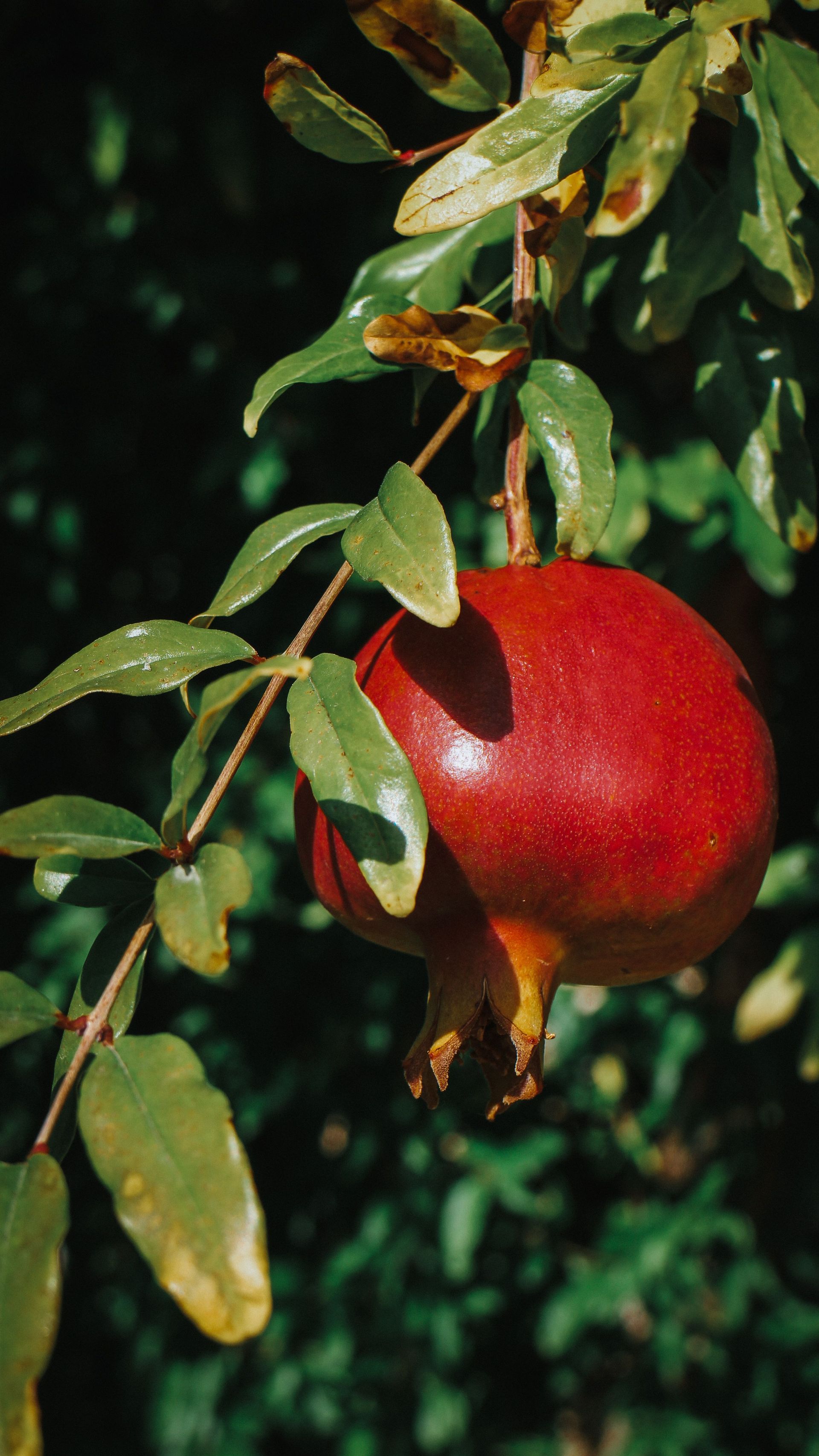
Solomon builds the temple his father was not allowed to build. Seven years, with cedar wood from Lebanon. The stones are cut to size in the quarry, so that no hammer or axe is heard during the building. At the entrance he has the bronze-caster Hiram of Tyre cast two pillars, with capitals of lilies and rows of pomegranates. Each receives a name. Jachin: He will establish. Boaz: in him is strength. Whoever entered the temple passed between those two promises.
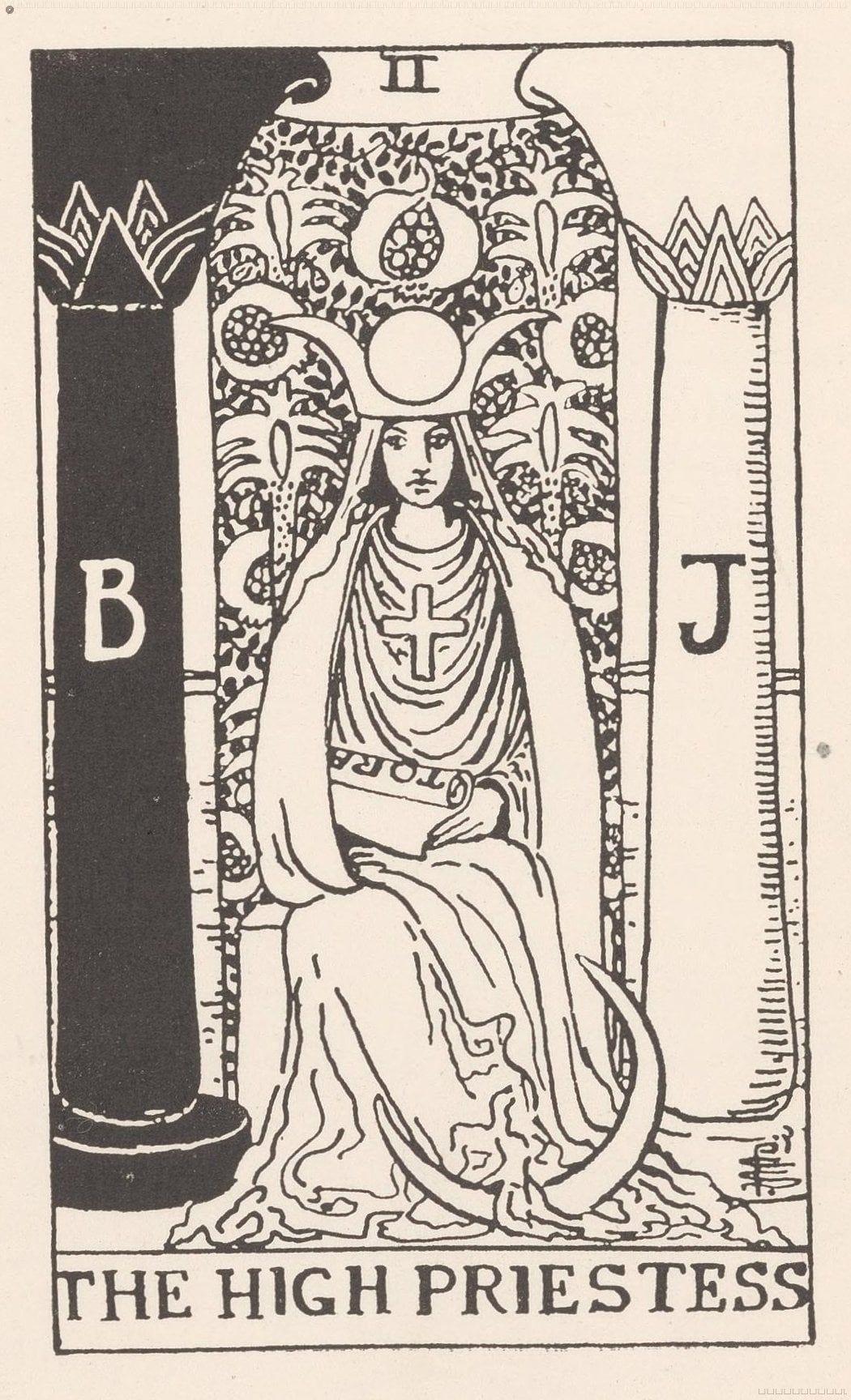
Almost three thousand years later, Pamela Colman Smith placed those pillars in her design of the High Priestess, for the tarot she published with Arthur Edward Waite in 1909. The High Priestess sits between a black pillar marked B and a white pillar marked J. Behind her hangs a veil full of pomegranates, the same fruit as on Hiram's capitals. On her lap lies a scroll bearing the word TORA, half hidden beneath her mantle. At her feet lies a crescent moon.
The High Priestess sits in the middle, between black and white, between establishing and strength. Jung described how carrying such tension, without cutting away either side, calls forth the transcendent function: the third that arises when opposites are carried rather than resolved. That is exactly what Solomon did with the child. He seemed to want to cut, but he held the tension until the truth revealed itself.
The High Priestess is also the listening heart made visible. She knows, but she does not speak. She guards the veil between the conscious and the unconscious, as the curtain in the temple shielded the Holy of Holies. What she knows cannot be proven. It can only be recognised.
The divided kingdom
Solomon's wisdom becomes world-famous. The Queen of Sheba comes to test him with riddles and returns speechless: what she had heard was not even half of it. Jung would call her the anima, the feminine wisdom from beyond his own world, who challenges his Logos. In the alchemical tradition she merges with Sapientia/ Wisdom herself.
But the story does not end in glory. In his old age his many wives turn his heart toward other gods. It is written that his heart was no longer undivided. What follows is almost bitter: after his death his kingdom will be torn in two. The prophet Ahijah tears his cloak into twelve pieces and gives ten to Jeroboam. What Solomon as a young king refused to let be cut in two is divided after all, in his own house.
The legend goes further still. The demon king Asmodeus tricks Solomon out of his seal ring and takes the throne in his likeness. Solomon wanders as a beggar, becomes a cook at a foreign court, and only finds the ring again in the belly of a fish. In Jungian terms this is inflation in its purest form. Whoever identifies with the Self loses it, and the shadow takes the throne. What is lost is found again in the depths.
In closing
I came to know this story as a story about wisdom. Now I read it as a story about love that cannot be proven, only shown. About a mother recognised by what she will not break. And about a line that was not handed down to me, but found me nonetheless.
What do you carry within you that was never officially passed on to you? And what in your life asks not to be cut in two, but to be held?
Thanks for reading xx
102726 Melanie
Sources
- The Bible: 2 Samuel 11-12; 1 Kings 1-11
- Den Bibel, Emden (Bibliotheca Philosophica Hermetica, Amsterdam)
- Ambrose of Milan, De officiis
- Mikraot Gedolot, rabbinic commentaries on 1 Kings 3
- Babylonian Talmud, Gittin 68a-b
- C.G. Jung, Aion (Collected Works 9ii)
- C.G. Jung, Two Essays on Analytical Psychology (Collected Works 7)
- C.G. Jung, “The Transcendent Function” (Collected Works 8)
- C.G. Jung, Mysterium Coniunctionis (Collected Works 14)
- Marie-Louise von Franz, Aurora Consurgens
- Arthur Edward Waite, The Pictorial Key to the Tarot
- Pamela Colman Smith, Rider-Waite-Smith tarot
- Source Library (sourcelibrary.org)