Contemplations on Spirit
'In this blog I contemplate the means to understand one self and the motivation that moves us to unfold in heart and soul.'
Transit Uranus Rx and the generational Uranus in Radix charts
We're at the conclusion of quite an intense summer. A basket-shaped configuration, two kite patterns in the sky, not to mention the eclipses and running underneath all of it an almost constant connection between Pluto, Neptune, and Uranus - the foundation of those larger configurations. That's a force working on a very deep level, on something we can't quite grasp but very much feel. You could see it in extreme expressions in politics, extreme expressions in nature, and in contact between people: somehow people were pushed toward a certain core, a deeper layer - stripped of whatever isn't authentic.
That's the nature of this moment, astrologically speaking, largely because of that configuration between the three outer planets. And when it connects with a personal planet in your chart - which happens for a great many people, since the Moon moves very fast, and Mercury and Venus pass through regularly too - quite a lot gets triggered.
Pluto is still retrograde. Neptune is retrograde. And now Uranus is about to station to go retrograde at 5 degrees 41 arc minutes. That gives us a combined force of these three archetypes, these three planets - and that combined force produces something like a cup overflowing.

How Do You Grasp Something That Isn't Really Graspable?
There are a couple of books I can genuinely recommend. The first is De Buitenplaneten in nieuw perspectief by Karin Hamaker-Zondag. The book grounds beautifully how the discovery of each planet unfolded, and shows that around the discovery of each planet, certain tendencies were already at play that represent that planet's own quality.
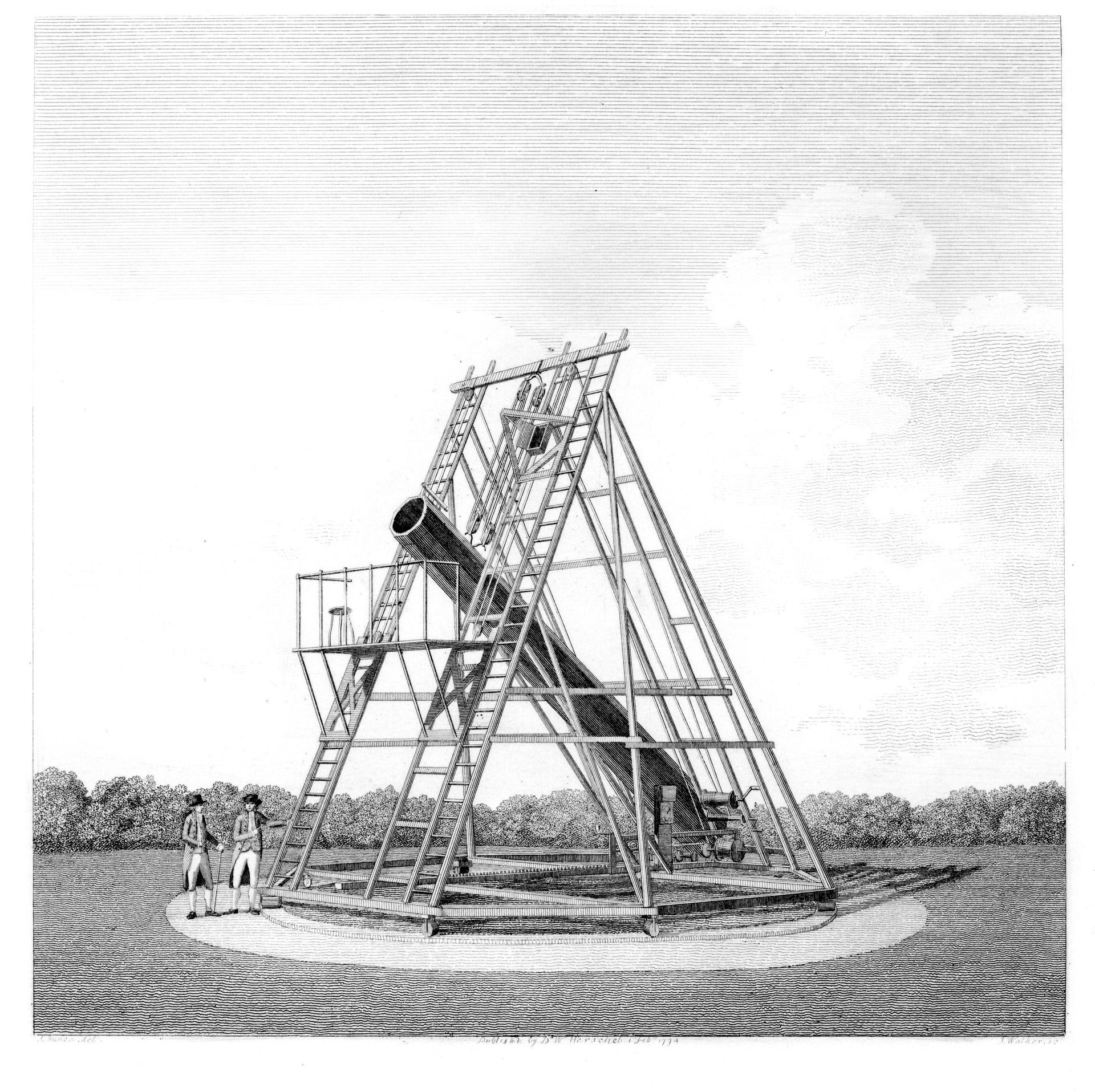
The musician William Herschel is credited with discovering Uranus on March 13, 1781, after several astronomers had unknowingly observed it in the preceding period without recognizing its true nature. What makes this remarkable, fittingly for Uranus, is that Herschel was a struggling musician who shared a love of music and astronomy with his father, and who - lacking the funds for a proper instrument - experimented with building his own telescope, and succeeded. From 1779 onward, he began systematically monitoring a bright "star," later going on to develop groundbreaking technical innovations in telescope-making. And, fittingly again, there's the sheer improbability of a celestial body being discovered by an amateur, after professional astronomers had repeatedly overlooked that very same object.
The book also covers research into how the outer planets work, particularly in people with parapsychological, paranormal, and deep spiritual experiences - for instance in relation to psychedelics, but also through other transcendent techniques such as meditation and breathwork. Genuinely worth reading.
The second book is by
Bernadette Brady: Astrology, A Place in Chaos.
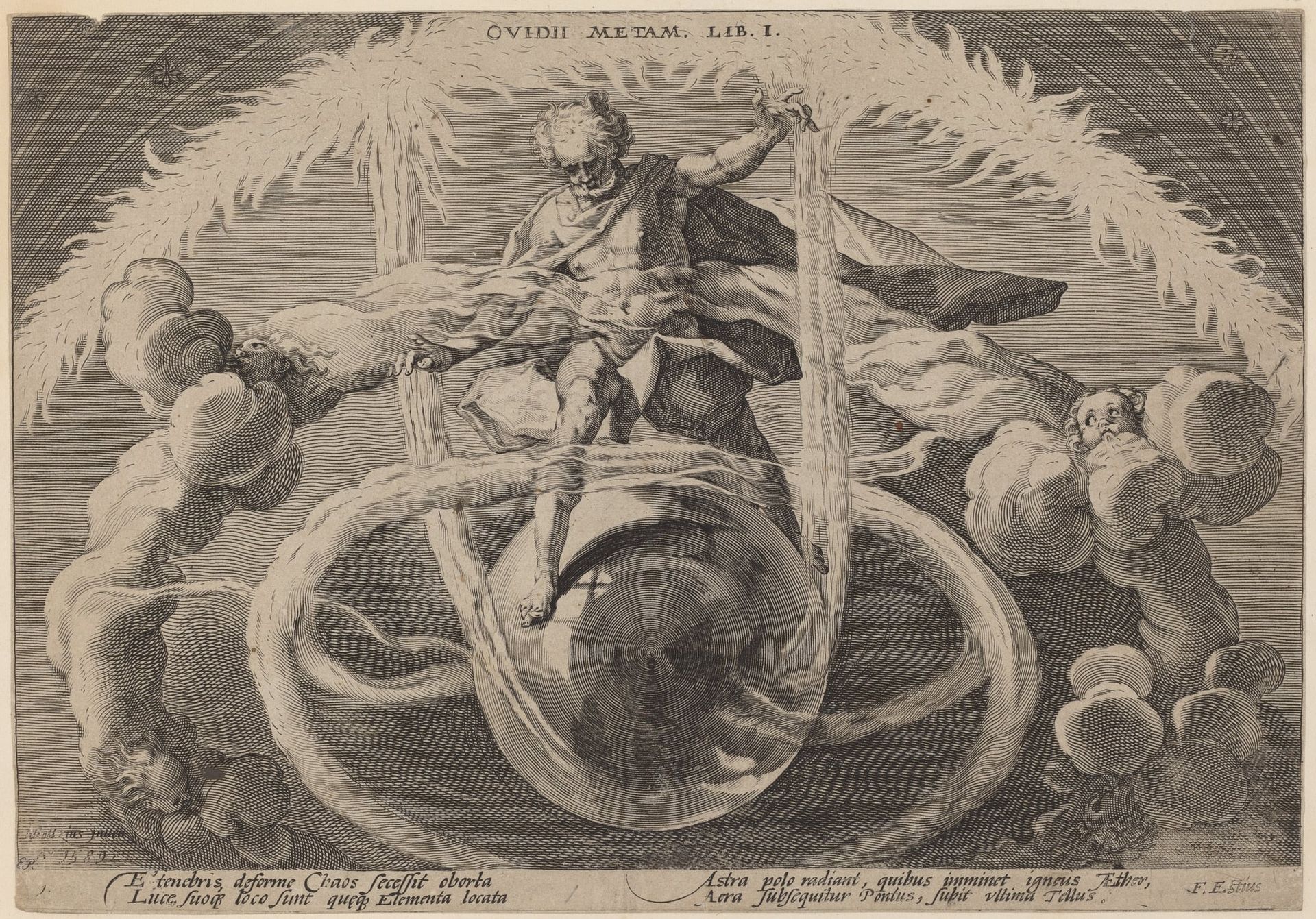
It isn't specifically about Uranus, but Uranus is the one who creates life out of chaos - something you can read beautifully in Greek mythology (I once wrote a blog about that too, when Uranus trined Pluto - you can read it here.)
The book shows nicely how causes that aren't causally connected can still be synchronistically linked in some way. You can read, for example, how - by chance, through weather forecasting at a weather station - people discovered that such an abstract system, one that doesn't hold up causally, still works, and can keep generating new patterns.
That's Uranus. Uranus asks us to do just that one different thing, so that the whole outcome of the pattern we call our life falls slightly differently. Saturn is almost the counterpart here: it asks us to understand and apply cause and effect, and wants a sense of responsibility and a conscience that develops alongside it. Uranus wants us to take a different step instead. That's literally out-of-the-box thinking - something that's difficult for a lot of people, because we all live inside our own narratives, our own story and our own field of reality, with inborn or learned, worn-in patterns that keep us constantly inclined to make the same choices. Those choices quickly result in a certain stagnation in personal development, or a certain tunnel vision.
Uranus is the force that can constantly shift our vantage point, so that we want to see things differently. That's a positive description of Uranus. Uranus is also quick-witted, sharp-minded, constantly reacting to everything that happens, and in doing so keeps the primordial soup in motion - which also produces unrest. When someone with Uranus holds a particular abstract idea, they can also cling to it quite dogmatically, which actually produces the opposite of Uranus's positive, breakthrough, renewing effect and the originality that comes with it - the freedom-equality-brotherhood theme, also associated with Aquarius, where Uranus rules in modern psychology. Then that's entirely lost, because then one is only able to see one's own view. Uranus's force therefore genuinely asks for a certain openness, flexibility, and capacity for self-reflection - which is in turn strongly dependent on other forces in the chart that either confirm or temper it.
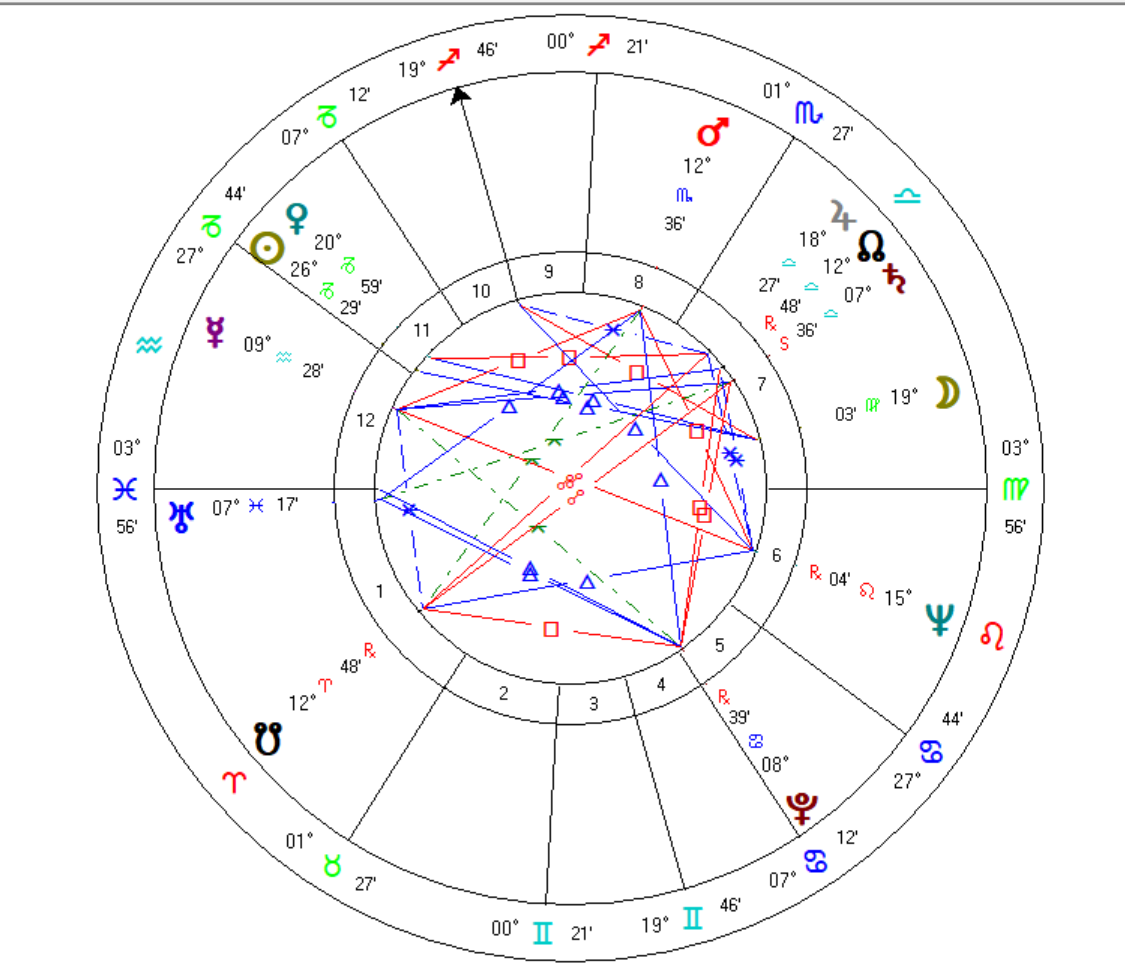
A Family Example Across Four Generations
To ground this, an example from my own family. In our family there's a clear Uranus family pattern, which becomes clearly visible from the generation born around 1920 onward - further back, unfortunately, I don't have charts. For privacy reasons I'm keeping this anonymous.
First generation. Between two family members who were married to each other, both have a very dominant Uranus: the first within a degree and a half orb, conjunct the Ascendant, in Pisces. Because it's an outer planet with slow motion - Uranus takes about eighty-four years for a full cycle - the sign background is highly collective. But the placement in the chart, in relation to the personal points, is very personal indeed. When a planet sits within a degree and a half orb on the Ascendant, that planet is very strongly felt and constantly interwoven with one's interaction with the outside world: a constant interplay with one's surroundings, and a certain degree of identification with that planet, because you feel it the moment you're out in the world and expressing yourself in some way. It also influences how you experience your body and how you present yourself, for instance through outward features - a very particular taste. That doesn't have to mean walking around with a mohawk and skinny trousers; it mainly needs to align with what feels authentic from the inside. If someone with a strong, dominant Uranus on the Ascendant finds it matches their own self-image to walk around in a three-piece suit, then that's authentic and fitting. If someone instead identifies with pushing back against the usual norm - say, walking in wearing a tracksuit while everyone else is in suits - then that's what takes the lead. Uranus, after all, is extremely strong.
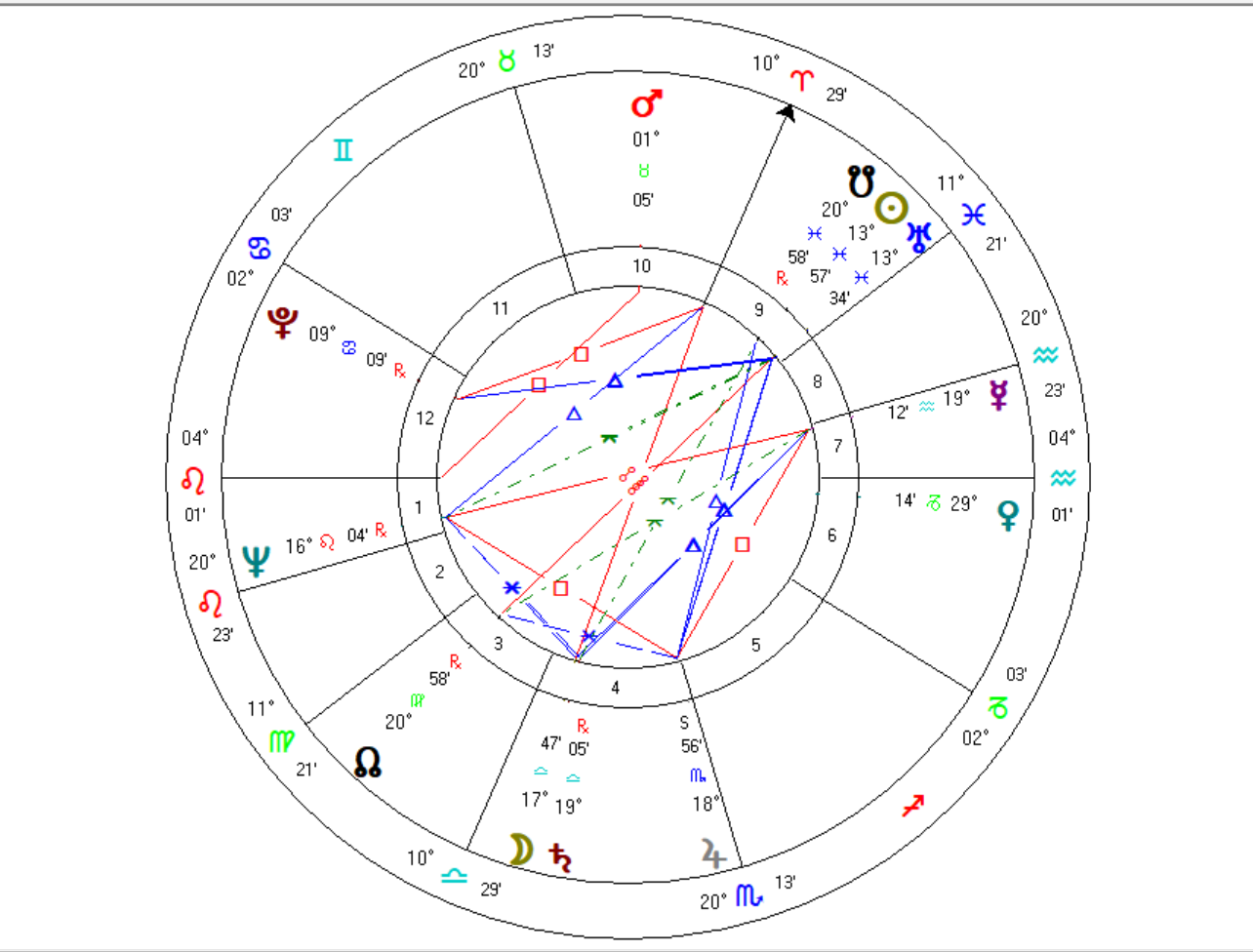
This person's partner has an exact conjunction, within one degree, between the Sun and Uranus, at 13° Pisces, in the ninth house. That's also extremely dominant: the Sun in Pisces, with Uranus right on top of it, is a strong force in the ninth house - constantly felt. The light that shines from within, the path someone walks to be themselves, is constantly subject to Uranus's caprice, but also to the genius and brilliance Uranus can carry - and everything in between.
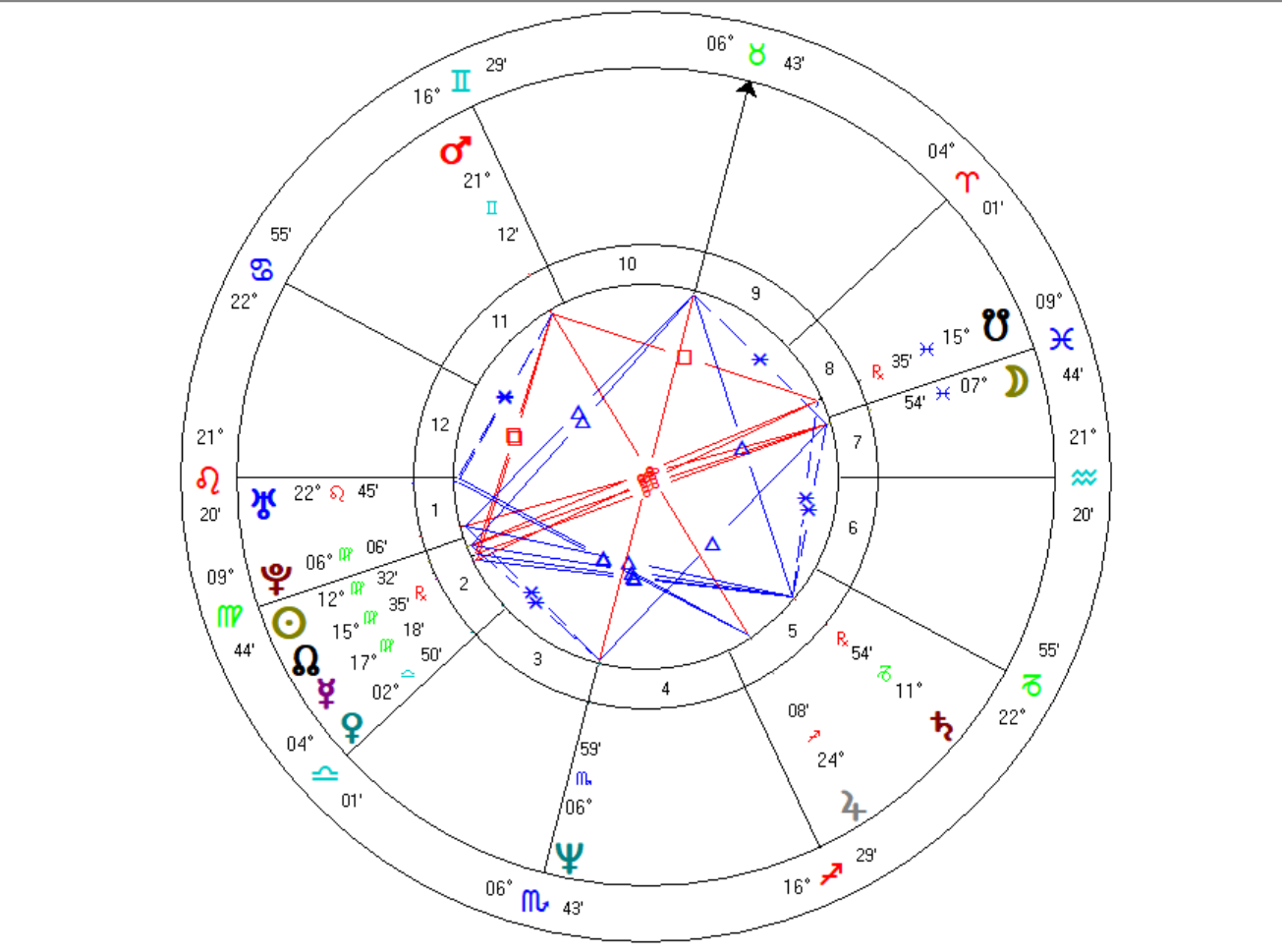
Second generation. One generation younger, we again see Uranus within a degree and a half orb conjunct the Ascendant - just as in the previous generation - but now in Leo. No connection to the Sun this time, but again a very palpable, powerful Uranus. A Leo Ascendant is a gateway into the chart, a doorway to the outside world, one that is naturally radiant and open, but also very steadfast: taking up a certain amount of space in one's surroundings, radiating a certain brilliance and authority - colored by Uranus. That translates into a desire for a certain degree of authenticity and originality in outward personal presentation - in personal contact, and in the way someone processes and internalizes all the impressions and stimuli coming from outside.
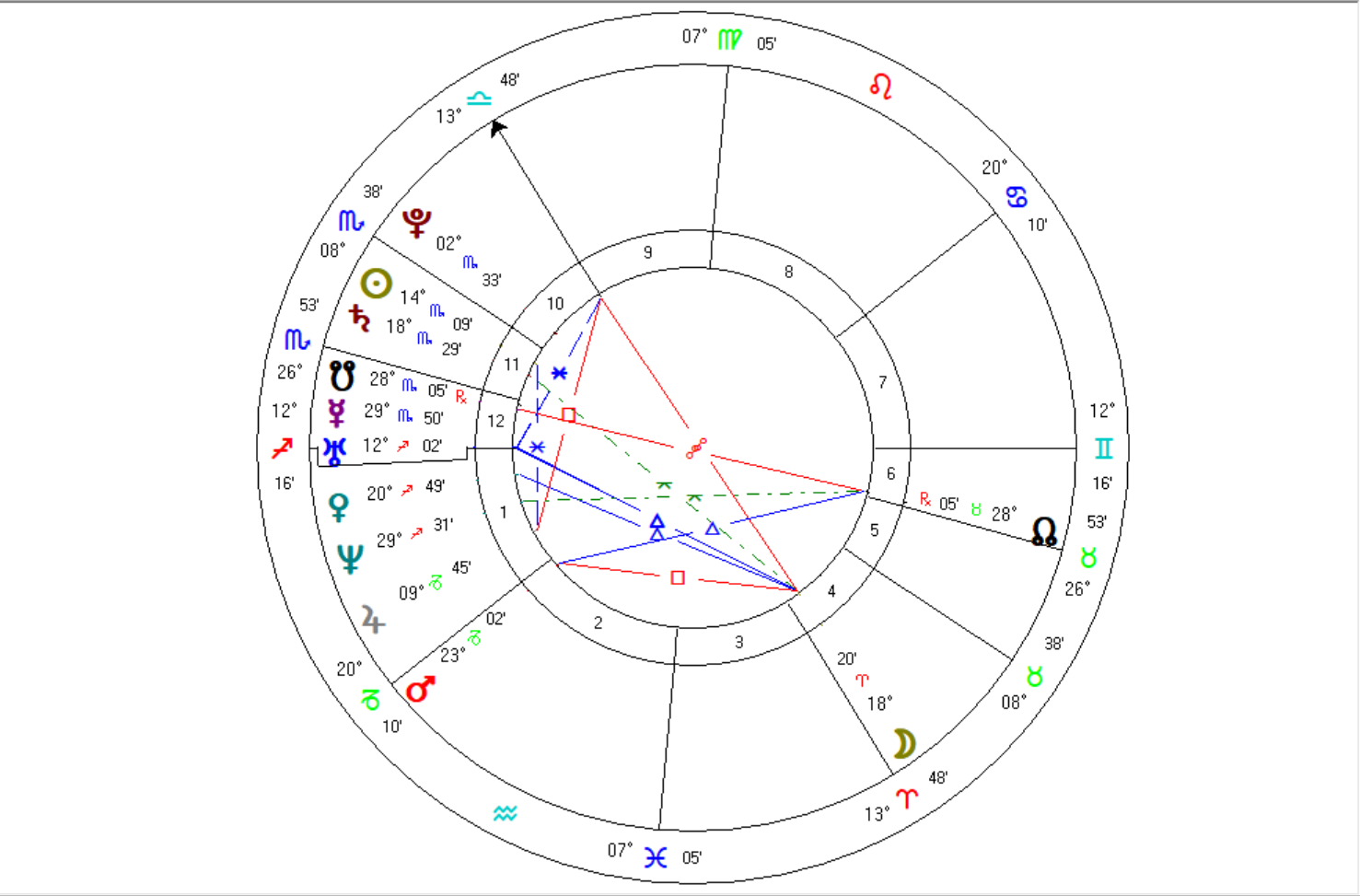
Third generation: my own generation. Here Uranus sits at almost exactly the same degree (fourteen arcminutes' difference) conjunct the Ascendant, this time in a different fire sign: Sagittarius. There's also a connection to the Moon - another very personal point. Uranus in Sagittarius on the Ascendant wants to constantly reach outward, constantly interact with its surroundings, experience that abstraction, that quickness of mind, that constant jumping from branch to branch - and through that, keep gaining new insight and wanting to break through existing structures. That can be quite disruptive for people who don't handle it well. That constant restlessness feels fitting to the chart owner - it belongs to the psyche - but when this planet's unrest and chaos also spills over onto the surroundings, that's strongly felt by those around them, and not always welcome, especially for people who thrive on a certain constant calm. That's also one reason chart owners in earlier generations may be inclined to suppress such a Uranus where possible. And that's precisely where the key to how family patterns form lies.
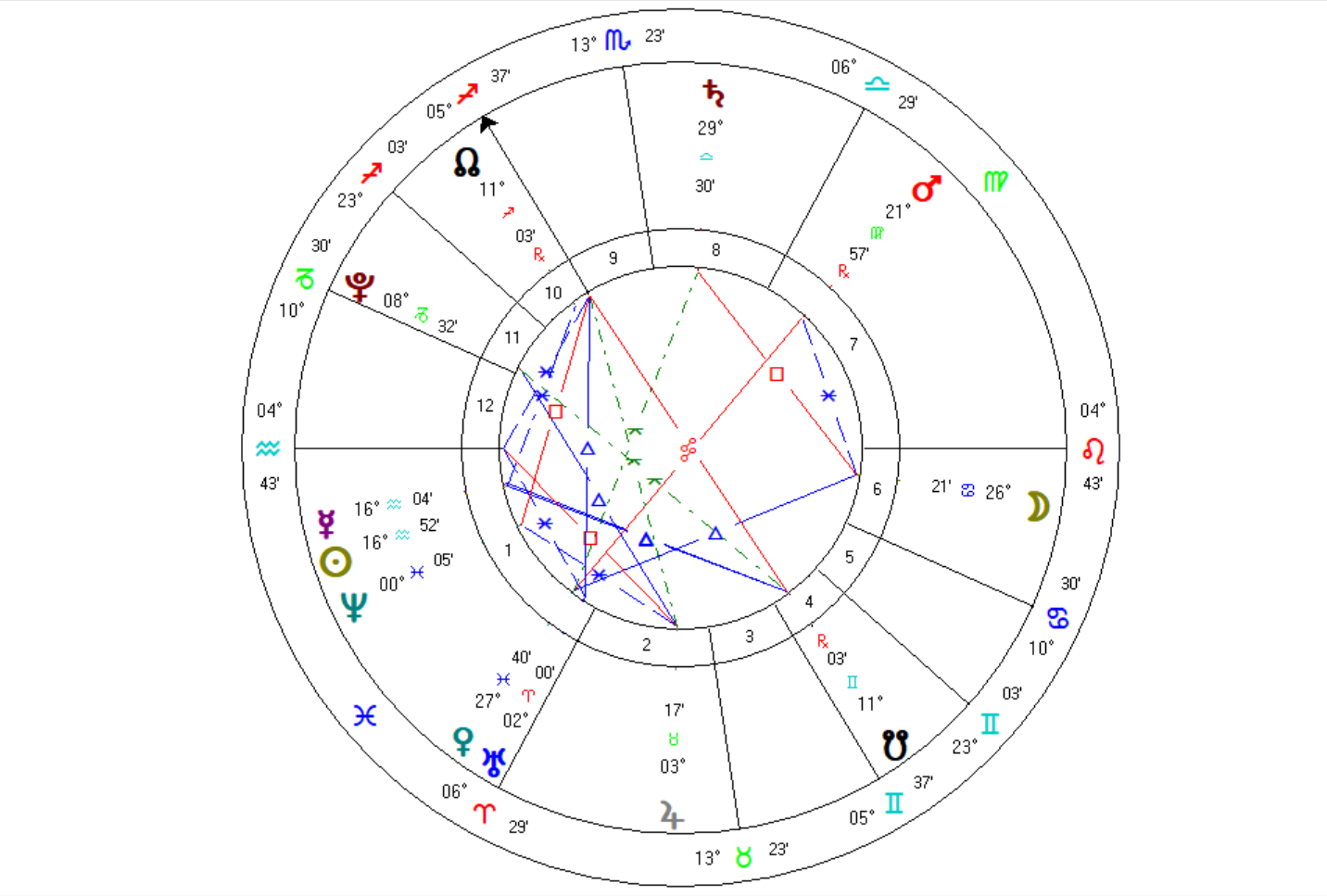
Fourth generation. Here Uranus sits unaspected, at 2° Aries, connected only to the Ascendant and the Midheaven - and is therefore counted as unaspected. An unaspected planet works in a pointed, concentrated way: it gets very strongly emphasized, yet isn't really consciously experienced by the chart owner (as far as Uranus can be consciously experienced at all, being an outer planet). For this chart owner, it's impossible to suppress this force - it is going to be, and needs to be, lived, and the only way to deal with that is to make room for that Uranus. It's good, then, that we know this from birth - not in order to steer a child in a particular direction, but to take into account that this may be at play and may or may not be consciously lived out.
That ties in beautifully with Bert Hellinger's work on family constellations: when certain qualities and talents go unlived, they remain, so to speak, hovering above the family - unlived by those who came before - until someone is born into the family in whom that force, that quality, is represented so strongly (for instance through an unaspected planet, a Yod, or some other family-linked connection) that it becomes impossible to suppress that planet any longer. That's exactly what we see here.
This chart belongs to a child born in 2012; how this will unfold further remains to be seen, but I'm very curious, astrologically as well - alongside simply having a loving family bond and wanting someone as much happiness as possible.
Making way
The beautiful thing about this kind of research is that at some point you start to see: if you have a particular talent that's in your chart and wants to be lived, you can - by entering into a relationship with that planet, by having knowledge of the archetype and how it works in the psyche, as an inborn quality - consciously make room for it. With the personal planets, up through Jupiter and Saturn, you can still consciously choose how to give shape to it. But from Uranus through Pluto, it's really impossible to truly steer those planets. The only thing you can do is make room once you see they're dominant - something I've done very much in my own life, and will keep doing. Family patterns are persistent, and while we've now looked at four generations, it wouldn't surprise me if this goes back further still - I just can't say, since I don't have those charts.
I'd rather not go into exactly how this theme expresses itself in detail in a blog post - that's something I do in conversation with a client, together with them, through a kind of intake: how does this work in the client's own psyche, and how does it want to be lived? I can say a little about how it has shown up in my own family, though. In the first generation, the partner of the chart owner with Uranus on the Ascendant raised a family in a groundbreaking way: as a woman, alone, following her husband, traveling the world with a whole brood of children - in the late 1930s and early 1940s. That was completely unconventional at the time.
The generation above mine, in a way, refused to go along with the conventional societal framework - particularly within mainstream healthcare, where that chart owner worked - and retired at an early age to walk their own path. That, too, is Uranus. In my own generation, I seek out abstraction in all kinds of ways in life; astrology is a beautiful image of that, since it's itself an abstract system. And the generation after mine? We'll find out. With a growing child you can sometimes already see that they're just a little different from the rest - but you can't say anything yet, because that's a unique path.
I also know other people around me with a dominant Uranus, who give shape to it in their own beautiful ways - very different from the examples above, but very much their own. That individuality is very characteristic of Uranus: it has to align with your own self-image, your own experience of the world, and somehow give that a renewing form - partly by pushing back against the norm.
What Can You Concretely Expect?
Uranus moves through a sign, and therefore also through a particular life area (house) in your personal chart. You can see where the signs begin at the outer rim of your chart, along with the degree. In my own chart, Gemini is split across two houses: it begins in the sixth house - where we are now - and will eventually move into the seventh.
Uranus retrograde through the sixth house means that extra force is placed on everything connected to that house: my daily circumstances, and how I make myself useful within my daily structure, come under that strong, driving force of Uranus. For me, as an astrologer, that's a gift, since Uranus is quite literally the ruler of astrology. But it can play out in other ways too - the sixth house also governs health, physical health, so that's something to stay alert to as well.
That's how you look at a transit like this: Uranus retrograde is the cup overflowing (see also my earlier blog on retrograde planets). It's an invitation not just to witness the authenticity and originality living within that life area, but to actually live it. If Uranus is moving through your fourth house, you might, for instance, rearrange something in your home, renovate a room, move furniture, or redecorate - or things might shift within your family of origin: new contacts, new insights about where you come from. If Uranus is moving through your third house, you might develop a new interest in Uranian subjects, or start using new technology in your communication, allowing you to cross certain limiting boundaries.
As I said before: retrograde planets have a bit of a reputation for being very negative, but that's not how I see it myself. What is characteristic of retrograde planets is the shadow period. Uranus moves directly through a stretch of degrees, and then turns stationary - which happens tomorrow or the day after. Then it turns around, and moves back over those same degrees (so to speak, since nothing actually turns back - it's an optical illusion). That stretch of the chart gets very strongly emphasized as a result: a constant evaluation of what still wants breaking through there, now that Uranus is moving retrograde across it.
Collectively, the trend of ground breaking technological innovations within the theme of the Mutable Air sign Gemini that surface to this mentioned emphasized part of the tropical zodiac. As well as the possible outcome of dogmatic hard headed strive for abstract utopia that has completely lost the sense of the freedom it was originally designed for.
Now remember the myth of Prometheus ;
The fire we steal in order to see is the same fire that later consumes us - until it sets us free again, too.
Thanks for reading xx Melanie 090826