Contemplations on Spirit
'In this blog I contemplate the means to understand one self and the motivation that moves us to unfold in heart and soul.'
PuRva Phalguni Amavasya - Jyotisa

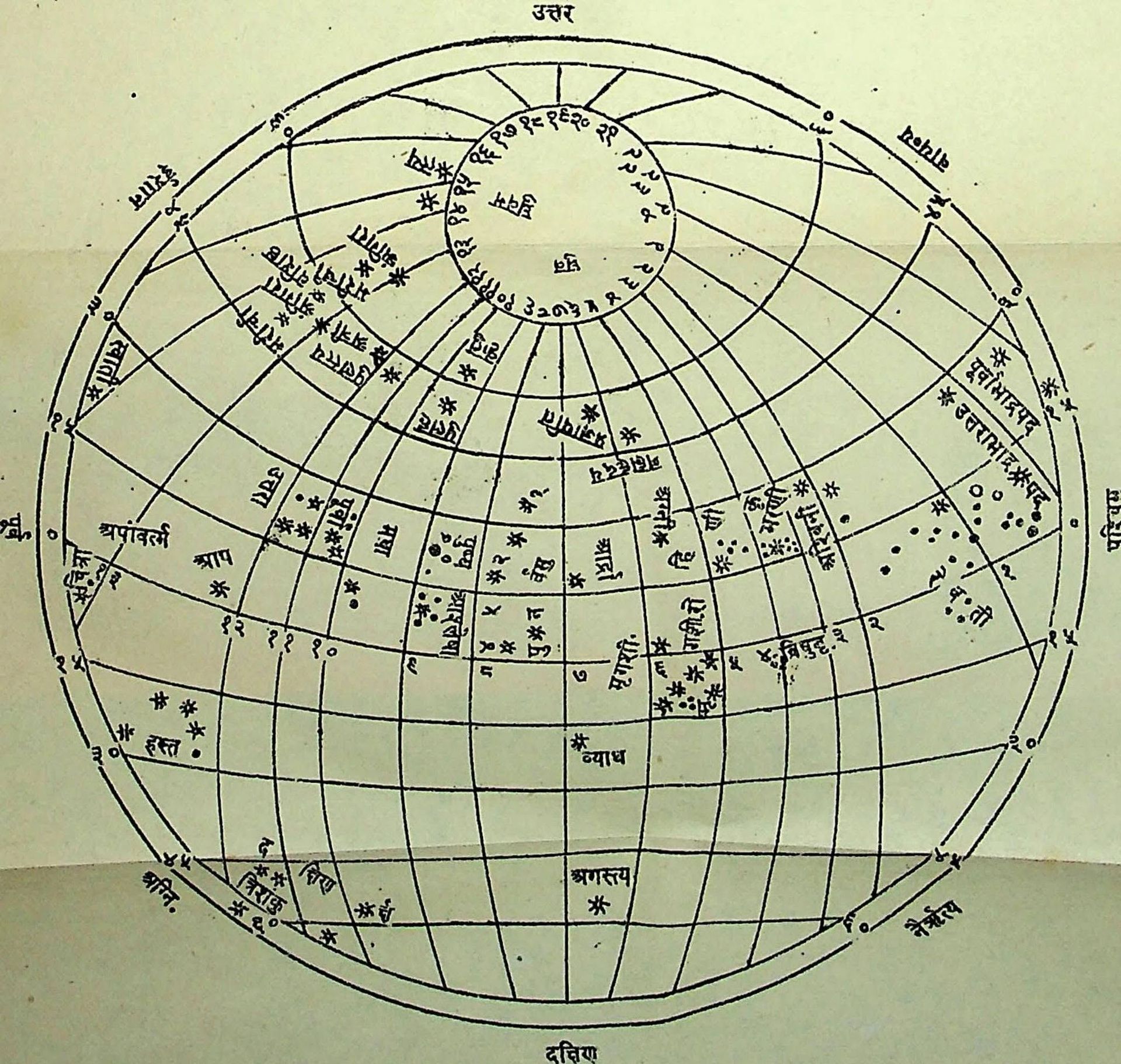
Lunar mansions and padas
In Jyotish you actually look at the lunar mansions. In the tradition I follow there are twenty-seven lunar mansions, each spanning thirteen point twenty degrees. These are divided into four padas, and the four padas stand for Dharma, Artha, Kama and Moksha. So when a planet - or a luminary, in this case the moon - falls into a nakshatra, you also look at the pada, because that shows you the effect of what it is directed toward, what it is working toward the most.

The new moon in Purva Phalguni
This morning, at five twenty-three, there was an exact conjunction between the sun and the moon, in the sidereal zodiac, in the sign Simha (Leo), in the nakshatra Purva Phalguni. Purva Phalguni is one of two: there is Purva Phalguni and Uttara Phalguni. Both are about a bed - a marriage bed, a bed of union. It is about experiencing pleasure, experiencing a harmonious connection (purva phalguni) It is about enjoyment, sexuality, sensuality. Having the finest spot within the realm of the gods (uttara phalguni), so to speak. Looking at the new moon, it falls in Purva Phalguni, and you could say that this month is really entirely under the sign of this lunar mansion, so the creative energy is very strong.
This month naturally brings a great many ceremonial matters and activities - Ganesh Chaturthi is celebrated, and Pitru Paksha, the honoring and remembrance of the ancestors, right at the end of the month. That, too, touches on this creativity. Ganesha governs the harmonious flow of energy, the removal of obstacles, prosperity and abundance, the auspicious passing of time, and the overcoming of all challenges.

Amavasya and the chart of the moment
At the moment of that exact lunar conjunction there is, of course, a chart, which I've shared it here. In that chart there are a number of aspect configurations that matter, and I want to walk through those. Afterward, using myth to sketch a picture of what is actually at play in this month's Vedic new moon. A new moon is Amavasya - a true new beginning, a dark moon. If you know what chart that moon coincides with, and what quality surrounded that new moon, you can say something about the energy you might work with this month.

Mars and Saturn: limitation and heat
There are quite a few, in Vedic teaching you call them malefic, influences around the Lunation. The moon itself is aspected only by Ketu, and by the sun of course. But around that same moment there are all sorts of other configurations among the planets themselves.
Among them is a mutual connection between Saturn and Mars.
Saturn, on one hand, for boundaries, limitation, delay. There is also a call here on the durability of things. Mars, on the other hand, is very much about sharp penetrating heat, action, the possibility of inflammation, and conflict. Those planets are also placed in a lunar mansion. Mars sits in Punarvasu, which the moon has just left - it is part of the sign Gemini. Punarvasu is very much about the power of wealth - Mars action also on the material level, and it sits in pada two, which is about Artha, basic needs. So for the coming lunation, that could become a theme.
All of these interpretive factors are always felt far more strongly in relation to one's own birth chart - what I'm describing here is quite general.

Aditi, the primordial mother
The deity who governs Punarvasu, where Mars stands, is Aditi. Aditi is the primordial mother from whom we all descend. So you can sense a deep feeling of a driving force emerging from that creative capacity - that constant, birthing energy of such a primordial mother. We may feel that very strongly, but through Saturn's influence there can also be an element of delay mixed in. It may well be that, in one way or another, something arises that makes us not really notice that we are moving forward, even though we do feel that driving force very strongly from within. As if the slow pace demands of us to to be aware of the long term effect of our actions.
Revati and the rhythm of nature
Saturn, Shani, stands in Revati. Revati is the last nakshatra of the sidereal zodiac, in the sign Pisces. Revati is about the rhythm of nature and the power of nourishent. Saturn itself is, of course, also a form of measuring time, of the passing of time and the causality of things - the watchman on the tower, who also asks us to be responsible. Revati provides a connection with the natural rhythm of nature. That fits very well with Mars, which stands in Punarvasu, connected as it is to that primordial mother. Revati people are often very good at caring for, and guiding from one phase to another.
Creative effect - and its shadow side
How might this actually play out? Mangal Mars in the lap of that primordial mother in Punarvasu, and Saturn, Shani, stands in Revati. These two forces are essentially asking us to reconnect very strongly with that primordialmother energy, and with the rhythm of nature. Especially now, in this new lunation, in a very creative way - because Purva Phalguni, which is where we're working from, is of course that marriage bed. We are literally inviting that primordial knowing back into our creative process. That, of course, is a very positive effect - a negative effect could be that, in one way or another, things escalate further in nature, and with regard to opposition between groups of people, in the form of wars and attacks. That is also something that is absolutely at play, and something I really do want to name.

Rahu: chasing self-interest
Mars receives one more aspect - the fifth aspect from Rahu. Rahu is the dragon's head, an upagraha, a calculated point, but Rahu is the force within us that makes us chase our urges, and strive for something in a very extreme, exuberant way. So Rahu makes an aspect to Mars. These are all traditionally malefic influences - meaning that, according to traditional Vedic teaching, we will most likely see a negative effect from this. But telling it this way, I don't only feel something extremely negative about it. I also feel: okay, a driving force like this is genuinely needed to bring us to a higher plane, with regard to the rhythm of nature, with regard to connecting to the earth and the primal power that arises from it.
Rahu stands in Dhanishta nakshatra, part of the sign Capricorn/Aquarius, which is about prosperity. So what we may be confronted with is exactly that extreme pursuit of personal self-interest. We can certainly see that reflected strongly - in America you see Trump seizing power for himself like someone possessed. I'm not at all one for political astrology, but here you simply cannot avoid it.
In personal life, it's good to weigh: what am I willing to give up for my own personal interest, and what sacrifices am I making in that - and is that actually good for me. It's very good to stay alert to your own motives - are my motives pure, is how I'd put it myself.

Jupiter and Venus: depth and temptation
Jupiter also makes an aspect to Venus. Jupiter still stands in Ashlesha nakshatra, and Ashlesha asks us to turn our deepest biases toward something of virtue, a healing power, and a deep form of knowledge and wisdom. Jupiter-Brihaspati is, of course, the guru, the teacher who gives us new perspectives, new insights. In Ashlesha nakshatra that is a very profound, occult knowledge that bubbles up from a primal knowing. That, too, ties in beautifully with that theme of the connection between Mars and Saturn.
Jupiter now makes a connection with Venus, and Venus rules this lunation - Venus rules Purva Phalguni, Venus is the lord of that lunar mansion. Venus is our planet for experiencing harmony, pleasure, expressing and receiving affection.
This lunation's Venus stands in Chitra nakshatra, and Chitra is the architect of the gods, of the divine realm. It is really focused on the sensory and the tangible in life, and on expressing something divine through that. I can imagine that when you hear all these themes, the term malefic influences alone is already a bit of a turn-off for a lot of people. But Venus and Jupiter are benefic influences, which connect with each other and thereby reinforce one another. From that deep pool of consciousness that Ashlesha is connected to, Jupiter can strengthen that Venus, and that form-giving power, that tangibility, that creative quality of Venus, which also belongs to Chitra nakshatra - with that we can let it be permeated by deep, inner knowing. Another way this could play out is that only the external, the surface, ends up mattering, and that you act purely from a kind of power conflict, a power struggle - which also belongs very much to Ashlesha. Ashlesha is also the serpent, which is very afraid of losing its own gain, and can also be jealous by nature, and wants to hold on to its own power. So the unique, mystical insights that Ashlesha brings up can also very much drive a form of power and power struggle, aimed at the tangible. That, in turn, underlines that Rahu principle - the chasing of our material gain - the example I gave was America, so we might see that reflected there too.

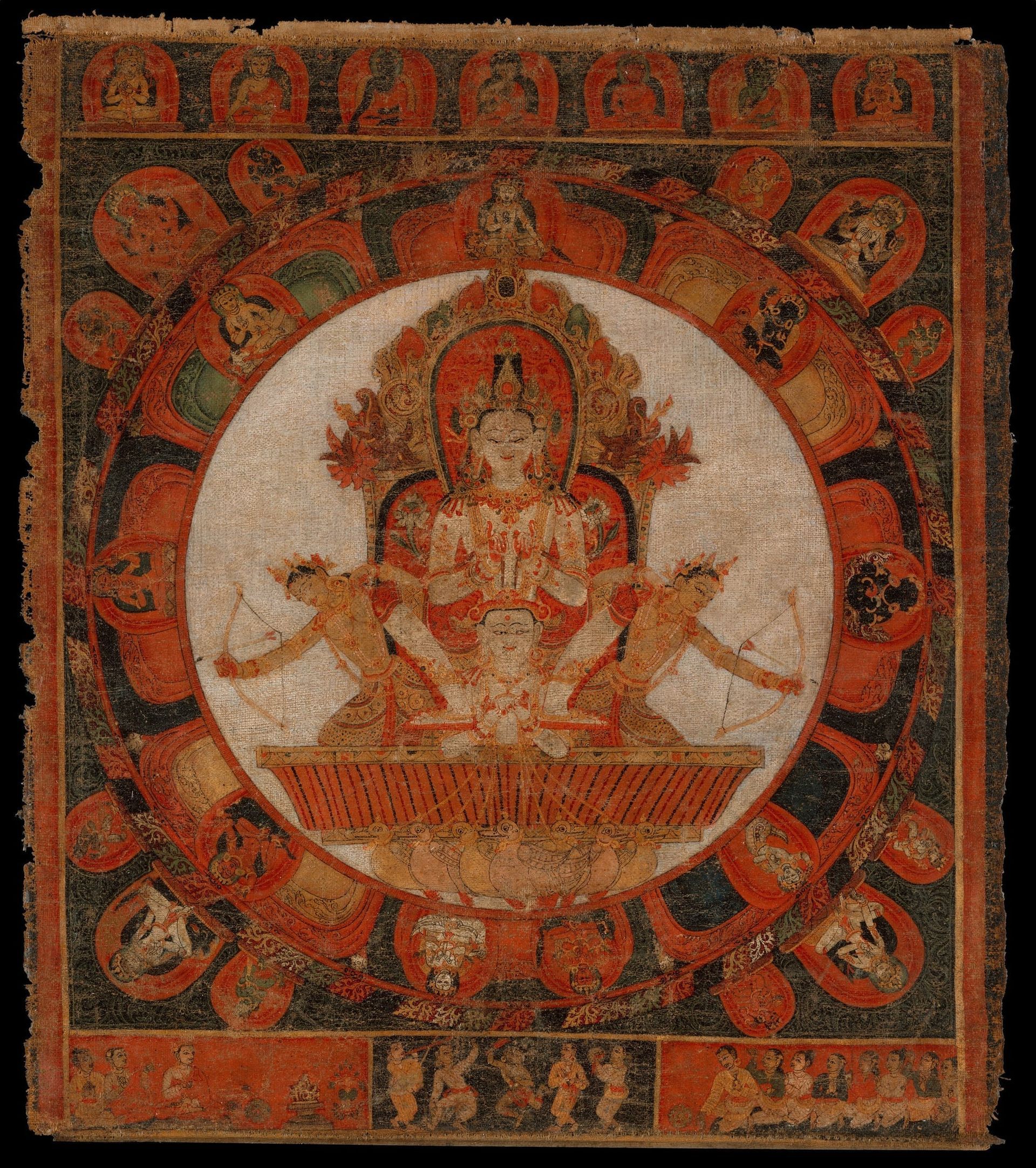
The story of Ushana and Venus
Once there was a great rishi named Bhrigu, who had a son named Ushana. Ushana became a great sage. He practiced meditation constantly and was a great devotee of Lord Shiva. He built a Shivalinga, a phallic symbol representing Shiva, to which he prayed and performed rituals constantly. He kept up this intensive practice for five thousand years, with the purest wish to receive a vision of Shiva. Shiva, however, did not appear to him. This did not stop Ushana - he kept up his rigorous devotion until he had fully conquered his senses and steadied his mind. He surrendered himself completely, in total surrender to Shiva. He also fasted severely, living on nothing but air for many years. After another thousand years passed, Shiva finally relented and appeared to Ushana. "Great sage, you are devotion itself. Ask for anything, and I will grant it." Ushana was completely immersed in his devotion to Shiva, and asked only that his prayers and his devotion be accepted by Shiva - nothing else. He completed his total surrender, and this pleased Shiva greatly. So Shiva gave Ushana the secret power to raise the dead and restore life. Shiva told Ushana: as long as you live in a physical body, you will be able to bring the dead back to life. You will also be able to conquer the gods, and none will be able to conquer you. You will shine in the sky like a star. After giving this boon, Shiva disappeared, and Ushana turned into the planet Venus. He became the guru of the demons, and gained the knowledge of raising the dead, which came in very handy in various battles with the gods.
I want to highlight a few things: there are a number of important factors here, including that devotional quality - being deeply devoted and faithful, surrendering to a particular purpose. That is a very deep love, one that selflessly forges a bond - in this case with Shiva. The fasting is also something remarkable, I find, because fasting is exactly what I would not expect from Venus. But fasting is a form of asceticism, a form of purification, and restoring purity is something I recognize very strongly in Venus. Bringing people back from the dead is also remarkable. I think stories like this are symbolic - you're dealing with something finite, a body, which stands as a symbol for something. You're dealing with something that ends, and with the power of Venus we are able, in one way or another, to bring new life back into that. To restore the balance somehow, to bring back the harmony - that's how I see it myself.
Purification, offering and Moksha
In what way is it necessary to purify something, and in what way is a particular offering needed in life to restore the balance - that's a question you could ask yourself.
Another question you could ask yourself is: where is my creative energy directed? Purva Phalguni is occupied in the fourth pada, and the fourth pada is about Moksha. Moksha is liberation from the cycle of life and death - freedom from it.
Okay, are we going to apply this creative energy in a way that can free us from that suffering, that attachment to the constant, to those temporary conditions in life, which can utterly enchant us, and which we as human beings can also chase after quite heroically. And so now really the question is: to what extent are we still connected to nature? Are we still connected to that primal knowing, and in what way do we apply it? In what way do we draw on it in this life? Is it, at this moment, of service - and service to what? Is it in service of personal interest, or is it in service of a creative process that instead brings a form of unity?
Thanks for reading
xxMelanie 091126