Contemplations on Spirit
'In this blog I contemplate the means to understand one self and the motivation that moves us to unfold in heart and soul.'
the chain of desire -
a note on pluto

Pluto as Archetype
In psychological astrology, every planet depicts an archetypal force in our psyche. To become whole, we express these forces as they are given in our blueprint, and aspect, sign, position and placement all matter in that. Within this whole, Pluto holds a special place.
Together with Uranus and Neptune, Pluto belongs to the outer planets. These three govern a more hidden, subconscious part of the psyche. Their activity can show itself in more dreams, more sensitivity, a greater need for breakthroughs, restlessness, lack of sleep and a scattered feeling, but also in moments of clear insight and vision. They move slowly, and their themes are generational.
Pluto itself asks for something specific. Pluto invites us to shine a light on everything that is dark, to embrace the shadow, and to live to our full potential, in line with the stage of personal development we are in right now. That process rarely goes gently. It is a purging. What is not authentic is taken from us, and we are pushed toward a deeper core or layer.
With the personal planets, up to and including Jupiter and Saturn, we can still consciously choose how we give them shape. With Uranus, Neptune and Pluto, steering is practically impossible. We can only make room.
Pluto cannot be steered. Only received.
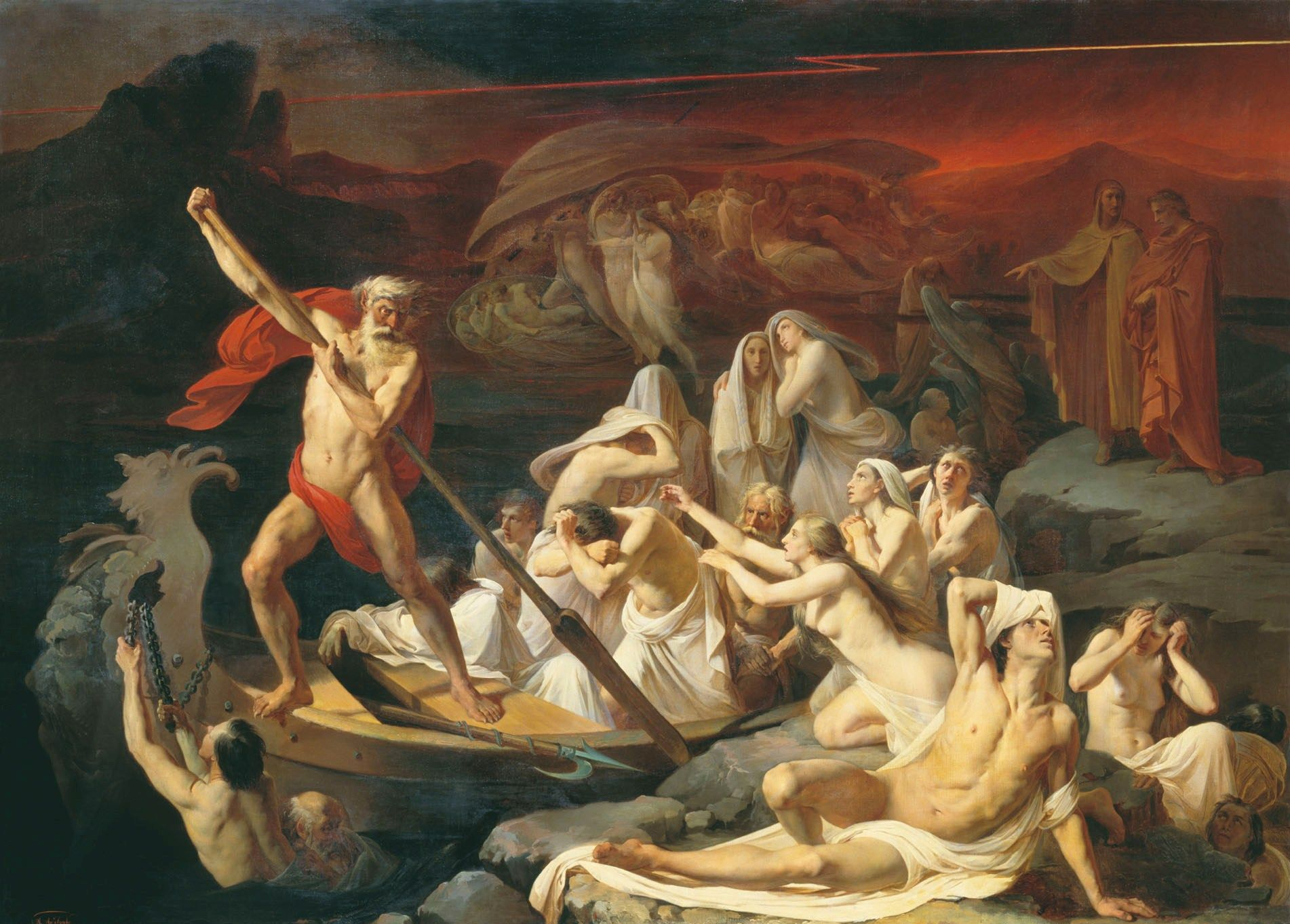
From Hades to Pluto
The planet carries the name of a god with a long history. To understand it, we have to go back to Greece.
In Greek mythology, Hades, the god of the underworld, was the firstborn son of the Titans Kronos and Rhea. His name is enigmatic. Its origin is uncertain, but since antiquity it has generally been understood as "the unseen one". In the Iliad - the epic Greek poem, he is described as the god most hateful to mortals.
Perhaps that is exactly why he received a second name. Possibly out of fear of pronouncing his name, the Greeks began, around the fifth century BC, to call him Plouton, from a root meaning "wealthy": from the realm below, the soil, come riches such as fertile crops and metals. The name was understood as referring to the boundless riches of the earth, both the crops on its surface and the mines hidden within it.
Plato plays on this in the Cratylus. There Socrates says that Pluto is the giver of wealth "which comes out of the earth beneath", and that the name Hades does not come from "unseen" but from his knowledge of all noble things.
The Romans took this figure over and blended him with their own gods. His Roman equivalent is Dis Pater, whose name is most often taken to mean "Rich Father" and is perhaps a direct translation of Plouton. Pluto was also identified with the obscure Roman Orcus, like Hades the name of both a god of the underworld and the underworld itself.
One name holds two faces: the unseen one and the wealthy one.
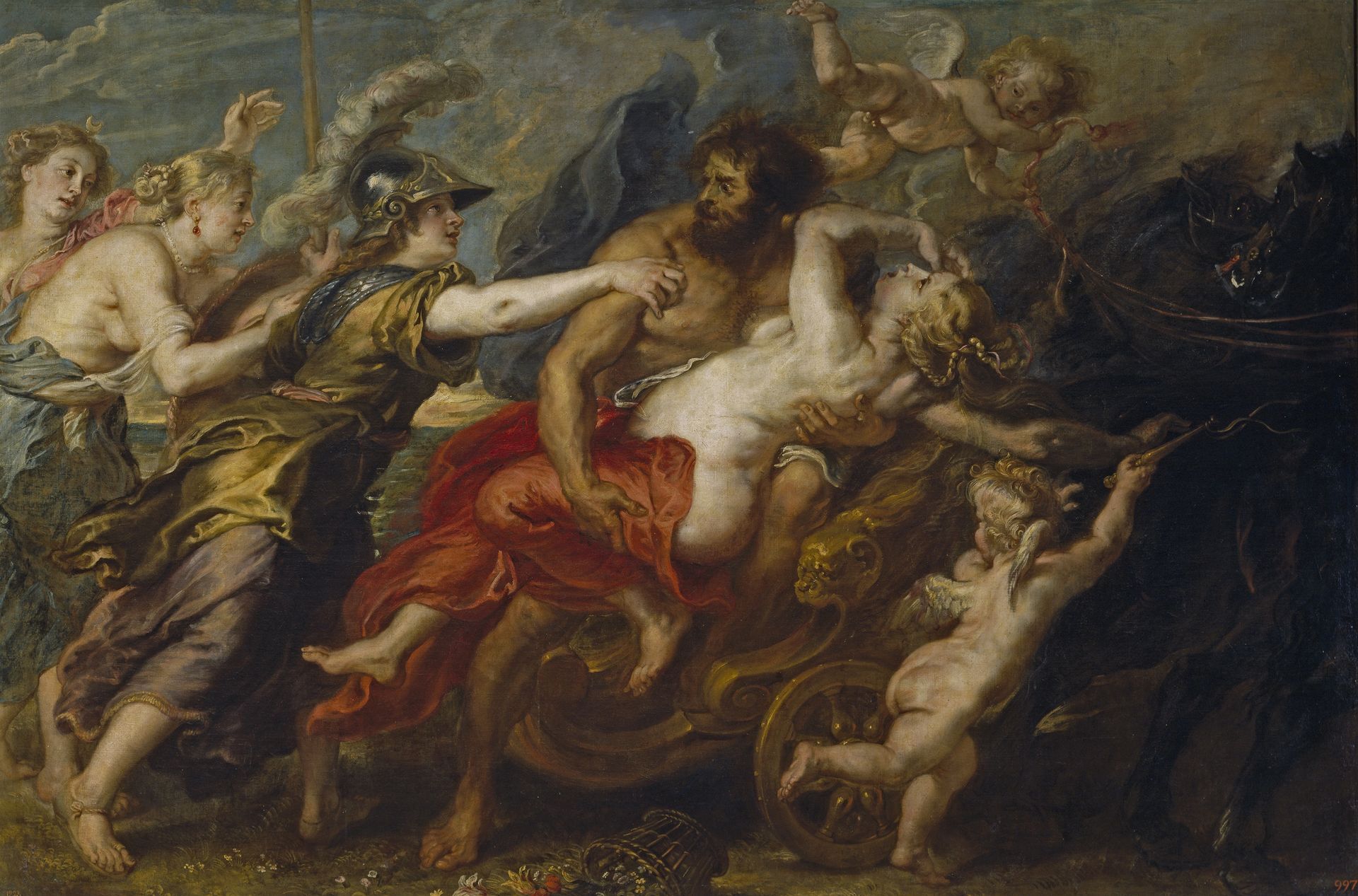
What You Do Not Choose - The Abduction of Persephone
Persephone was playing in a lovely meadow with her companions, the daughters of Oceanus, with Pallas Athena and Artemis. They were gathering flowers: soft crocuses, irises and hyacinths, rose blooms and lilies, "marvellous to see". And the narcissus, which the wide earth had made to grow, yellow as a crocus.
Persephone plucked it in her joy. At that moment the earth split open beneath her. Out sprang the strong lord, "the Host of Many", in his golden chariot, and he carried her off beneath the earth, all unwilling. She cried out with a shrill voice. This is how she later tells it to her mother Demeter herself: "All this is true, sore though it grieves me to tell the tale".
There was no omen and no choice, only a flower and an earth that broke open. This is often how a Pluto transit feels. Not something you decide on, but something that happens to you, just as you reach for something beautiful.
The Way Back That No Longer Exists - The Pomegranate Seed
Demeter grieved, and her anger against the gods was so great that Zeus finally sent Hermes down to bring Persephone back. Persephone leapt up for joy. But Hades secretly put a pomegranate seed in her mouth, sweet food, and forced her to taste it.
Ovid tells how heavily that weighed. Jupiter promises Ceres that Proserpina may return to heaven, but only under one law: if she has touched no food with her mouth below, "for so it is cautioned by the pact of the Fates". But the girl had already broken her fast. While wandering innocently through the gardens of the underworld, she had plucked a crimson pomegranate from a bending tree and pressed seven seeds from its pale rind into her mouth.
One person had seen it: Ascalaphus, son of a nymph from the dark caverns of the Acheron. He testified, and with his testimony he took away her return. The queen of the underworld groaned. She sprinkled his head with water from the fiery river Phlegethon, and he changed: his face became a beak, feathers and large eyes grew, long claws, and wings he could barely move. So he became the owl, the messenger of coming grief, a dire omen for mortals.
From that moment, part of Persephone’s year belongs to the underworld. Pluto strips away what is not authentic, and whoever has once made that descent cannot fully return to who they were. And the witness who speaks what really happened does not become more popular for it.
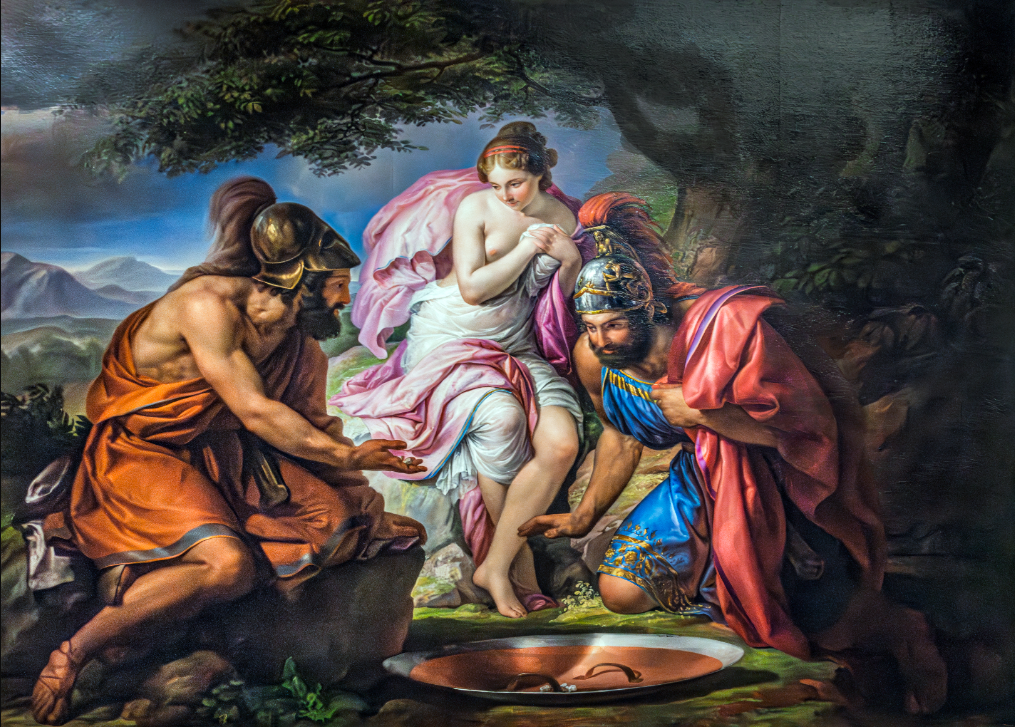
The Shadow of Power - Theseus and Pirithous on the Chair of Forgetfulness
Theseus and his friend Pirithous made a pact: each would marry a daughter of Zeus. Theseus went first. With Pirithous’ help, he carried off Helen from Sparta when she was twelve years old. Then it was Pirithous’ turn. He wanted no one less than Persephone, the queen of the underworld, and together they went down to Hades to fetch her.
Meanwhile Helen’s brothers, the Dioscuri Castor and Pollux, marched on Athens with an army. They took the city, freed Helen and carried off Theseus’ mother Aethra as a captive. Theseus’ sons fled, and another man became king of Athens. While the heroes below were trying to take something, they lost everything above.
In the underworld they were betrayed. Hades received them kindly and, on the pretence of a feast, invited them first to sit on the Chair of Forgetfulness. They grew fast to it and were held by coils of serpents. Pirithous remained bound there forever. Only Theseus was later brought up by Heracles.
The heroes were not tied to their chairs, but the rock grew into their flesh and held them as in a vice. Theseus stuck so fast that when Heracles wrenched him free, he left a piece of himself behind on the stone.
Whoever goes into the depths to take, for power, possession or a prize that is not theirs, becomes stuck in forgetfulness. The weapons of the upper world are of no use there. And even the one who is rescued leaves something behind. Embracing the shadow is something other than wanting to master it.
Making Room Instead of Controlling - Orpheus and Eurydice
The marriage of Orpheus and Eurydice began under a bad omen. Hymenaeus, the god of marriage, did come, but he brought no solemn words, no happy faces and no fortunate sign. His torch sputtered with tearful smoke and would not catch fire. Shortly after, the young bride was wandering through the grass with a band of Naiads. A snake bit her in the heel, and she died.
Orpheus grieved. He wanders through the loneliest places and sings from dawn to sunset of nothing but his dear Eurydice. When the gods of heaven could not be moved, he dared to descend into the underground realms of Taenarus. His voice and his lyre brought the underworld to a standstill. Cerberus stood gaping in wonder with open jaws, Ixion’s wheel stood still, and Sisyphus sat down on the stone he otherwise had to roll forward without end.
Before the throne of Pluto and Proserpina he spoke. In Ovid, he says he did not come to see dark Tartarus or to conquer the three throats of Cerberus. The cause of his journey was his wife. And he reminds the rulers of their own story: if the old tale of the abduction is no lie, then love joined them too.
They gave Eurydice back, on one condition: he must not look back before they reached the light. He stopped, on the very edge of the light, forgot himself, overcome, and looked back at his Eurydice. There all his labour was wasted, and the pact with the cruel ruler was broken.
Orpheus does not descend out of greed like Theseus, but out of love, and still he loses. With Pluto we cannot steer, we can only make room. Looking back is the attempt to keep a grip after all: to check whether the old still follows us, precisely when trust is asked of us most.
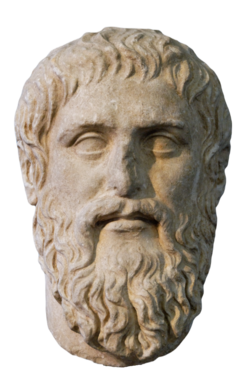
Full Potential - Plouton and the Chain of Desire
In Plato’s Cratylus, Socrates asks his companion Hermogenes which chain binds a living creature more strongly: desire or necessity. Desire, says Hermogenes, by far. Then, says Socrates, many would escape from the realm of Hades if the god did not bind them with the strongest chain. And that chain is not necessity but desire, the greatest desire there is: the thought that you will be made better by associating with another.
That is why, Socrates says, no one who has been with him wants to come back. Even the Sirens are under the spell of his words. He is the great benefactor of the inhabitants of the other world, and even to us on earth he sends abundant blessings from below, for he has far more there than he needs. That is why he is called Pluto, the rich one. And the lawgiver named him Hades not after the unseen, but after his knowledge of all noble things.
This is the reversal that tips the whole story. What holds us in the depths is not force, but desire. That is what Pluto ultimately asks: to live our full potential, in keeping with where we stand now. The god people dared not name out of fear turns out to be the giver of wealth and the god of knowing.
Thanks for reading,
Melanie 101426
Sources
Primary sources (Source Library)
Homeric Hymn to Demeter, trans. H.G. Evelyn-White (1920)
Ovid, Metamorphoses V and X, Aldine edition (1516)
Apollodorus, The Library, Epitome I, trans. J.G. Frazer (1921)
Pausanias, Description of Greece X.29, trans. J.G. Frazer (1898)
Plato, Cratylus, trans. B. Jowett (1875)
Leutsch, Corpus paroemiographorum Graecorum (1839)
Hades and Pluto