Contemplations on Spirit
'In this blog I contemplate the means to understand one self and the motivation that moves us to unfold in heart and soul.'
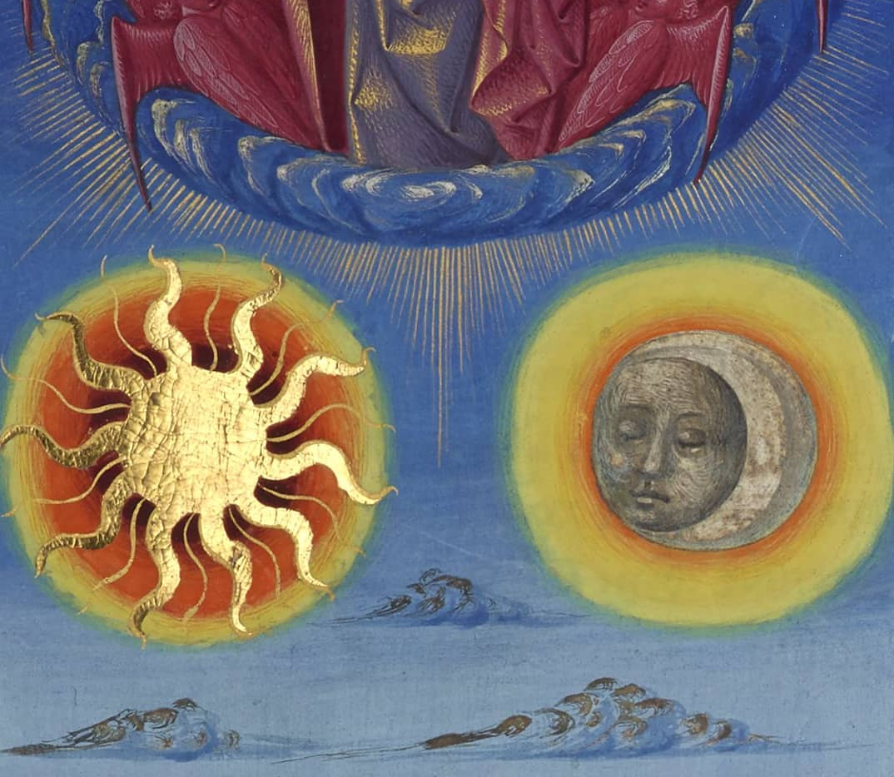
Lunar Eclipse TONIGHT 27 aug - Campuran
Prelude..
I was postponing this article because I'm studying both sidereal Jyotish and Western astrology from the tropical zodiac. I wasn't sure about choosing a theme, and I decided to look at it from the Vedic perspective. Of course, I'm also aware of the tropical zodiac because of my training in it. Then, the day before the eclipse, I came across a coherence in theme, and that's what I always look for. That's always a bit tricky, because you want to stay clean with the application of the rules and grammar of each system. So I'm going to start with Jyotish Vedic sidereal, and then refine it with the tropical, because there's a lot of resemblance in theme.
First off, this is all felt in relation to the personal chart.
When you look at these eclipses - the eclipse of tonight - you have to decide what kind of chart you use, and in relation to that chart, this will make sense. Since I'm bridging this between two systems, I'm not going to go into detail on the exact degrees of the planets and zodiac signs, because that's a difference of approximately twenty-three to twenty-four degrees - sidereal being about twenty-three-point-something degrees back in the zodiac in relation to the tropical.
Samudra Manthan
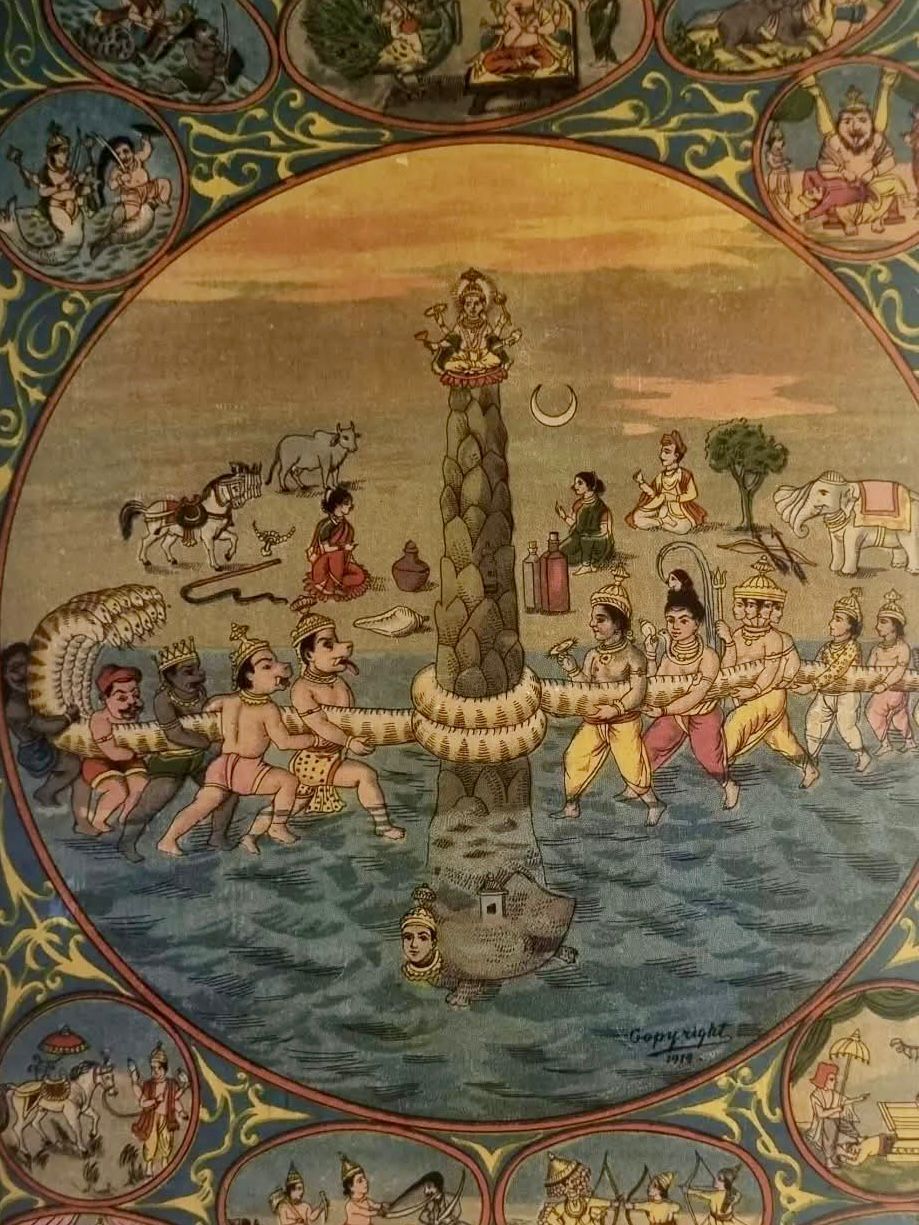
A very brief version of the Samudra Manthan, to explain how Vedic arts look at eclipses.
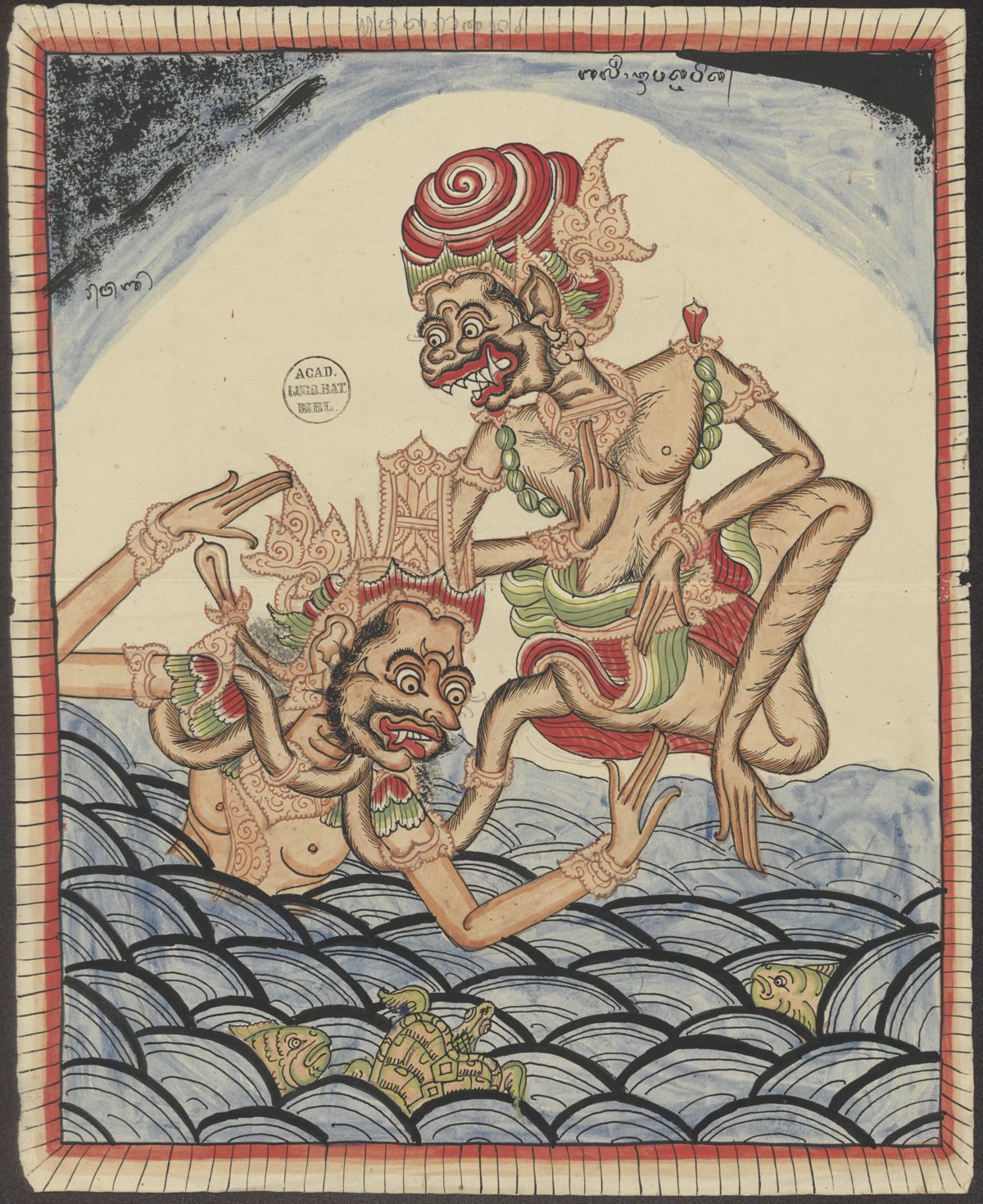
A very long time ago, there was a conflict between the Asuras and the Devas. Asuras are, in speaking terms, demigods - not really, but just for the story. The Asuras wanted to obtain the amrita, the liquid of immortality, so they were looking for a team to hold the other side of the churning rod, and asked the Devas to help. I'll share the short version, so I'll miss some details, but I just want to paint an overview picture. They used Adishesha, the serpent king, as the churning rod, wrapped around the holy mountain, to churn the ocean and obtain the amrita. During that process, they brought up beautiful things from the ocean - for example, Dhanvantari, the sage of Ayurveda, who later gave us Ayurvedic medicine, and many other beautiful things. The serpent serving as the churning rod fell in love with the moon. Vishnu caught on to this and wanted to make sure the moon was safe, so he beheaded the serpent. Just before he was beheaded, Adishesha drank one drop of the amrita, so the head lived on, and it is now constantly chasing both the sun and the moon in punishment for the beheading. That is why we have eclipses.
This is a mixture of Balinese and Vedic/Indian storytelling - there are different versions of the story. So that is the head of the serpent that is chasing something - an important feature of eclipses. Rahu, the head of the serpent, is a calculated point in Vedic arts, called an upagraha, meaning it's not an actual physical planet but a calculated point that conjuncts the moon in this case. The manas - the intellect and the mind - are conjunct this grasping, forward-moving force. That is an important feature of eclipses.
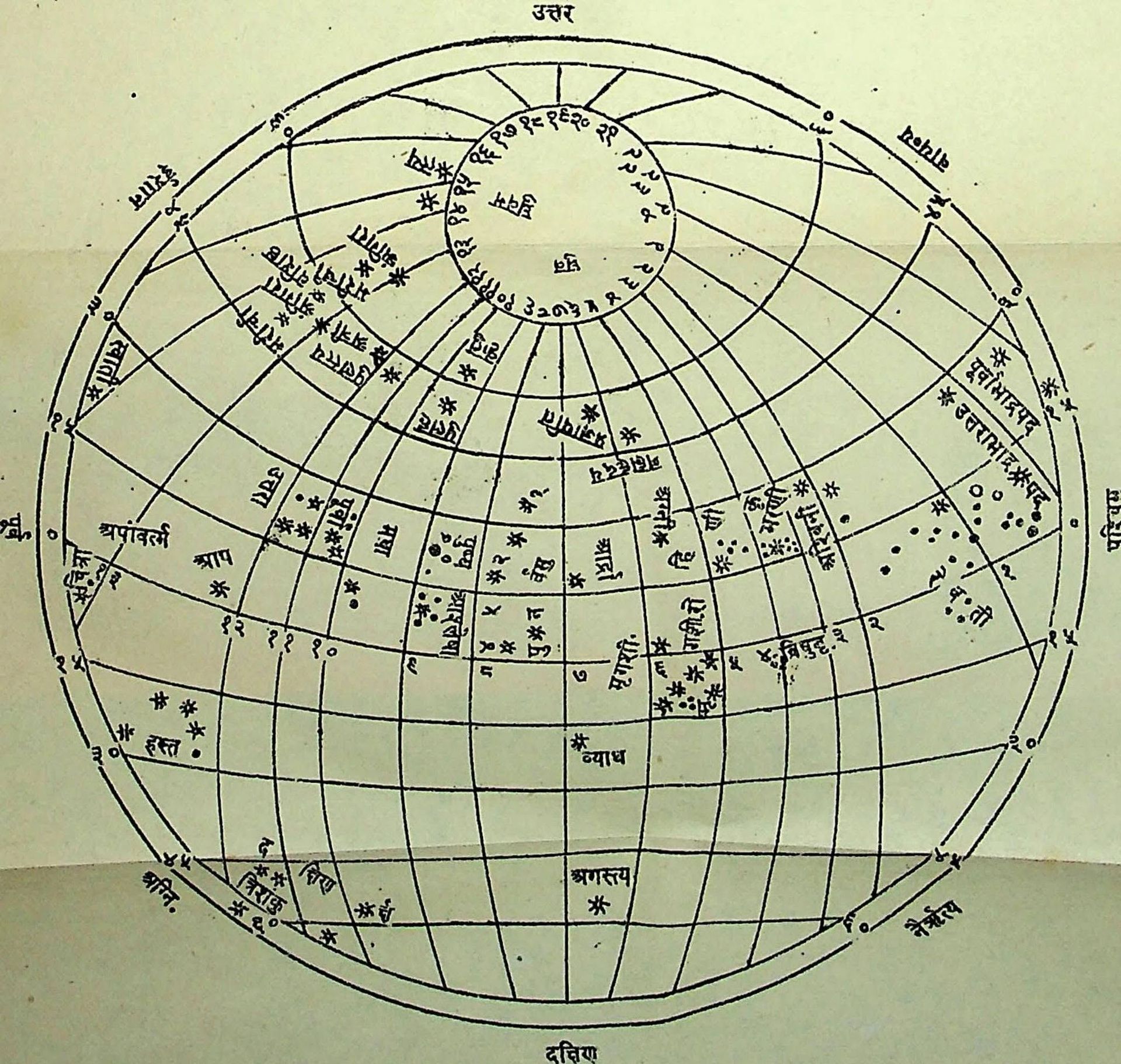
In Vedic arts, apart from the zodiac, there are twenty-seven lunar mansions called nakshatras - star constellations that don't move, sitting behind the zodiac. The constellation in sidereal Aquarius, Shatabhisha, meaning "a hundred physicians," is now part of this eclipse.
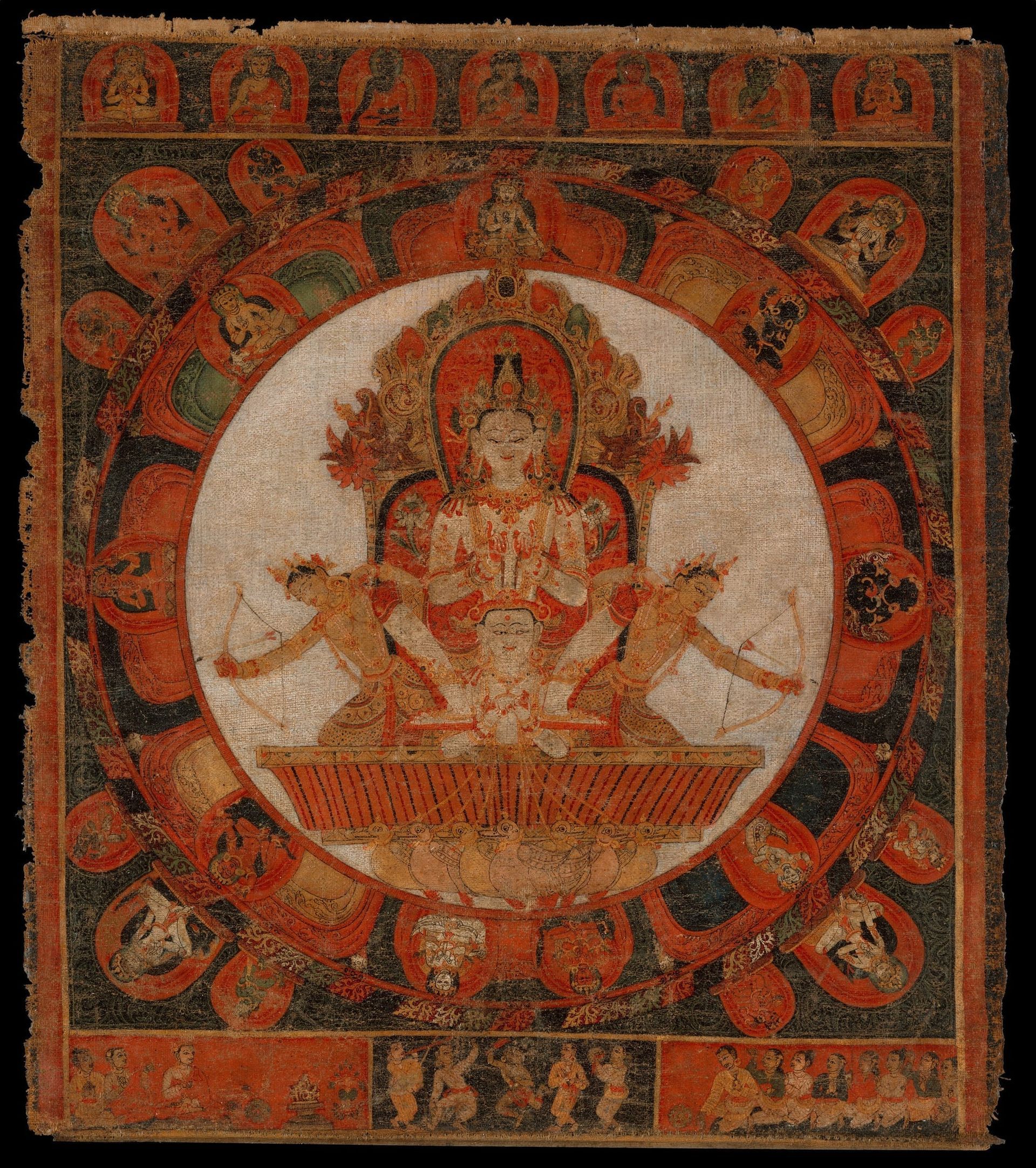
Shatabhisha is the medicine obtained through meditation and absorption in a state of oneness, in order to realize one's true nature by going into the depths of our being - the domain of Varuna, lord of the deep waters. Everything that is deeply felt is like a veil that is either removed or put on. You can either feel it deeply, immerse in it without denying it - which is self-healing - or fall into addiction, chasing, and running away. That's interesting, because it ties into the theme of the solar eclipse, which also had to do with healing: a poison that can be a medicine if used in the right doses - the Ashlesha nakshatra.
Rama and Varuna (from the Ramayana)
When Rama needed to cross the ocean to reach Lanka and rescue Sita, he performed tapas (austerities) for three days and three nights, invoking Varuna, lord of the seas, to grant safe passage. Varuna did not respond, and an angered Rama began to dry up and destroy parts of the ocean. Varuna finally appeared and asked Rama for help in cleansing the sea of the destruction, then granted the passage - a well-known episode illustrating both Varuna's role as lord of the waters and the danger of provoking him.
Shatabhisha, the healer, is a lunar mansion that reminds us of our inner depths, and that beyond our control there is a current - a state of awareness that carries us and is always present. Everything covering that can be perceived as a veil, and can be removed once we become aware it is a state of impermanence, a state of grasping - which beautifully highlights the Rahu theme, the grasping theme also included in the eclipse.
Quiet Sadhana
During this process - a couple of days before and also six or seven days after - it's advisable in Vedic arts to focus only on sadhana, not intense physical practice, but a quiet meditative practice that allows these deep waters to be felt, which is needed for self-healing.
Shatabhisha traditionally also governs the smile. That's one side of the coin - there's a grasping part to it, an addictive part, an enslavement part. When we want to disappear because we don't want to feel those depths, we can be subjected to addictions and coping mechanisms - escapist behavior. But once we quiet down, we can allow ourselves to settle, just like in Yoga Nidra, where we quiet the body, allow the brain waves to calm, and let prana return to source.
Shatabhisha governs our self-healing properties, which is important to remember, because most species in the animal kingdom still have this - they know in their gut what to do when they fall ill, for example. We're detached from that awareness because of industrialization and excessive cognitive focus. That is something we need to remember - that we have self-healing properties. Much of it is resting, deep resting, deep quieting down. Once we take the back seat with the mind, we can allow prana to flow back to source. That is self-healing.
To conclude the sidereal part:
When you look at your sidereal Jyotish chart, using whole-sign houses, you'll find Shatabhisha nakshatra in the sign of Kumbha (Aquarius). That is the realm relevant to this theme. If you don't have a sensitive point in your chart there, it doesn't matter - it's still happening, in relation to the circumstances that realm governs. And then there are also aspects to consider - that's Dristhi or gaze in Vedic arts.
In relation to that realm, there is something to be deeply felt. You can deny it, run from it through coping mechanisms like addiction, but anything that takes you away from feeling those deep waters will slow down or block this process. It's advisable to turn inward and recognize where there is something to be felt that can reveal inner wisdom and deep healing.
Now, in the tropical zodiac, there's a different story - and also a resemblance, a coherence.
I'll go into that now...
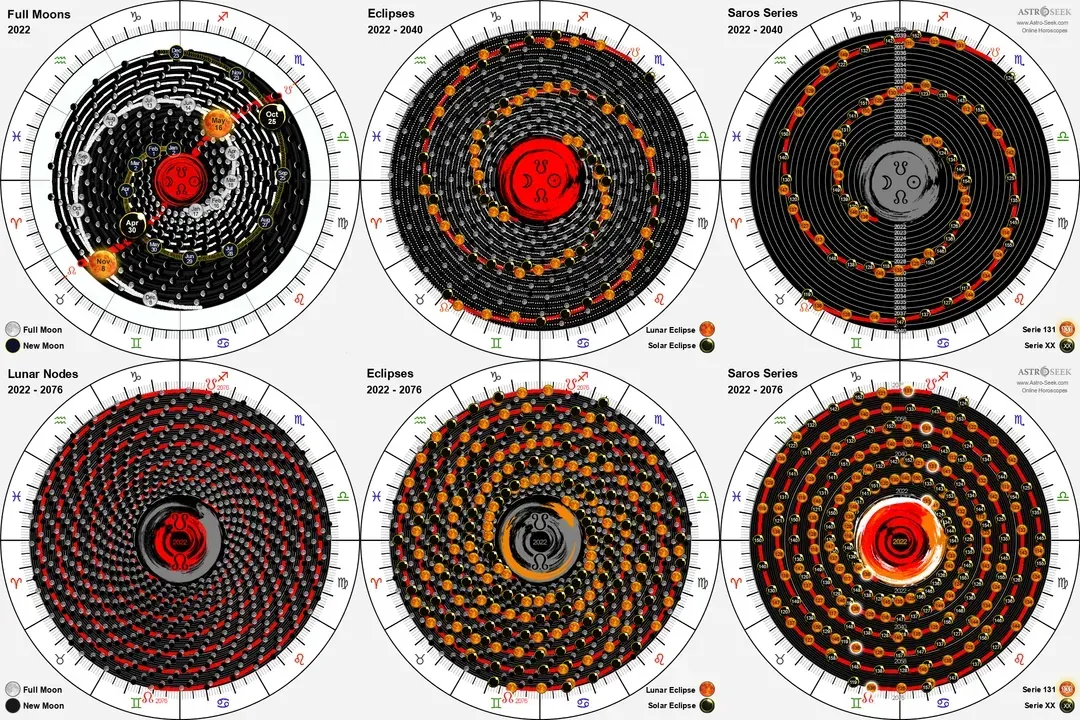
Each eclipse is part of a Saros cycle
That Saros cycle is born at either the South Pole or the North Pole, somewhere back in time. That's a layer not all astrologers take into account. I see many people sharing about the Pisces-Virgo theme, which is also relevant - that was illuminated through the eclipses in 2024. That's a layer you can study separately. What I find interesting is also to look at the birth chart of this eclipse series - especially now, because there's a connection to Uranus, and tonight's eclipse is affected by Uranus through an aspect. What that says is that part of the theme of the birth of this eclipse series - which spirals around the globe and returns every couple of years in a different zodiac sign - will come up again for us as a collective.
The theme of the birth of this eclipse series is breaking free from an ongoing negative situation, influenced by a lot of malefic influences: Pluto, Mars, Mercury, Uranus, and Saturn were all involved in the birth of these eclipses. Tonight's eclipse is going to be influenced by a similar trend.
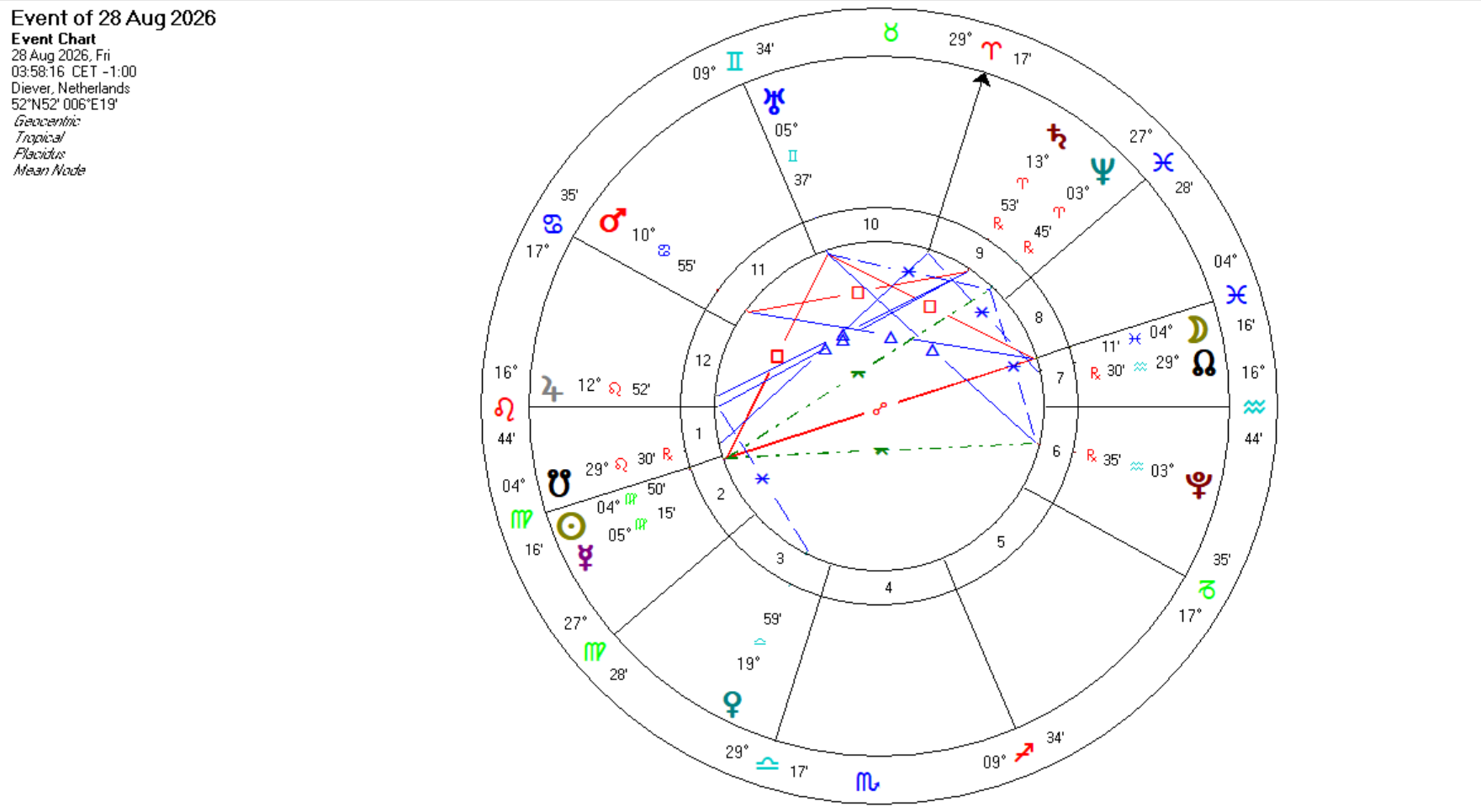
When you look at your tropical chart, that's usually not whole sign - most astrologers of psychological astrology use the Placidus house system, which calculates house cusps within zodiac signs. This means you can have overlapping houses, and houses entirely contained within one sign. So it's a bit more difficult to determine exactly where this eclipse falls in your tropical chart, but you can look at the outer realm of your chart. I'll note down the exact degrees later, since I don't have them now. What is there that falls away? Something is released - a conviction, a path - specific to your own chart. You'll have to find that out for yourself if you study this, in relation to where the eclipses fall in your chart.
Now, what is the coherence? What is the resemblance? What is there that is so significant that both tropical and sidereal astrology voice it to us independently?
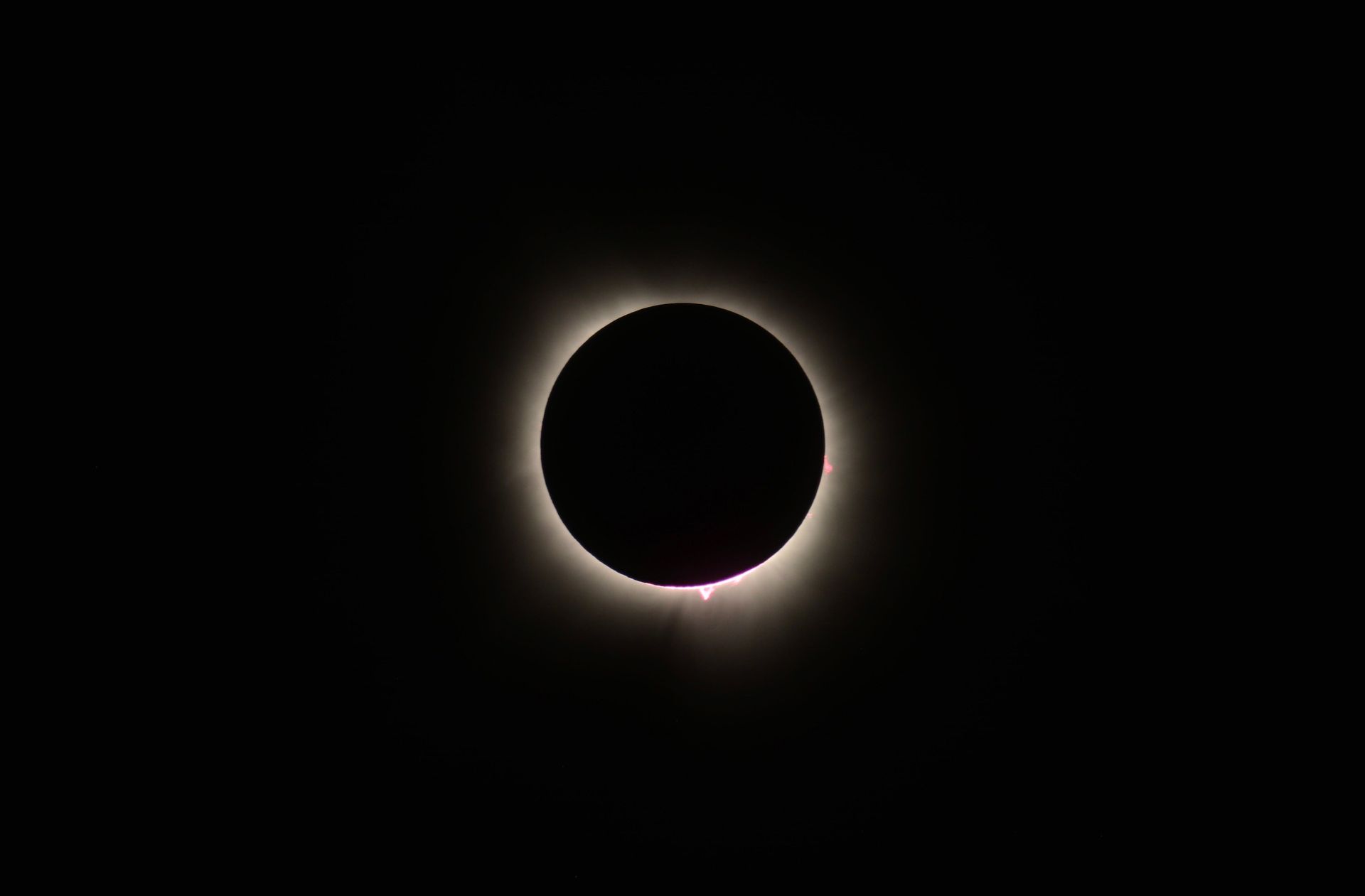
Both the Shatabhisha nakshatra and this Pisces eclipse of the tropical zodiac, in connection with Uranus, point to the same thing: the breaking free of old patterns, the breaking free of an old state of manas that has been tying us in, is now at hand.
There is deep self-healing to be done, and that is something beyond our control. The only thing we can do is make way for it. For Shatabhisha, it's advisable to quiet down - practice quiet sadhana, as I said - and avoid social interaction. Go inward and be still.
In tropical, Western astrology, it's advisable to see where you can soften the edges of self-criticism (Virgo - Pîsces axes), and - without focusing on the practical outcome - allow a flood of inner knowing to guide you there, which also happens in silence and often with some discomfort (square Uranus). It doesn't happen when you're pulled out of this work by social interaction, obligations, anything. So make way for that. I dislike it when astrologers mix systems, because it feels too personal - and I'm doing it myself, I realize that. But I can't not see it, because it's there.
So: what is there to be felt in deep waters? What is there that wants us to return home, back to source? Where does the flow of prana want to make way for that self-healing to occur?
There's a general need for softening in both systems - softening one's view of life, softening toward others in our interactions, and allowing that softness to hold the vulnerability needed for a sensitive feeling of our own self-healing.
One more note:
If something is difficult to release because it involves other people, keep in mind that everyone is going through this, even if it isn't consciously felt or recognized. This is happening for everyone - some people are more receptive to it than others. So be patient, not only with yourself, but with your peers and loved ones. Stay hydrated, and everything is there - we just have to get out of our own way.
Thanks for reading.
xx Melanie
082726