Contemplations on Spirit
'In this blog I contemplate the means to understand one self and the motivation that moves us to unfold in heart and soul.'
Amavasya in Hasta and the Nine Nights of the Goddess
The new moon in Hasta
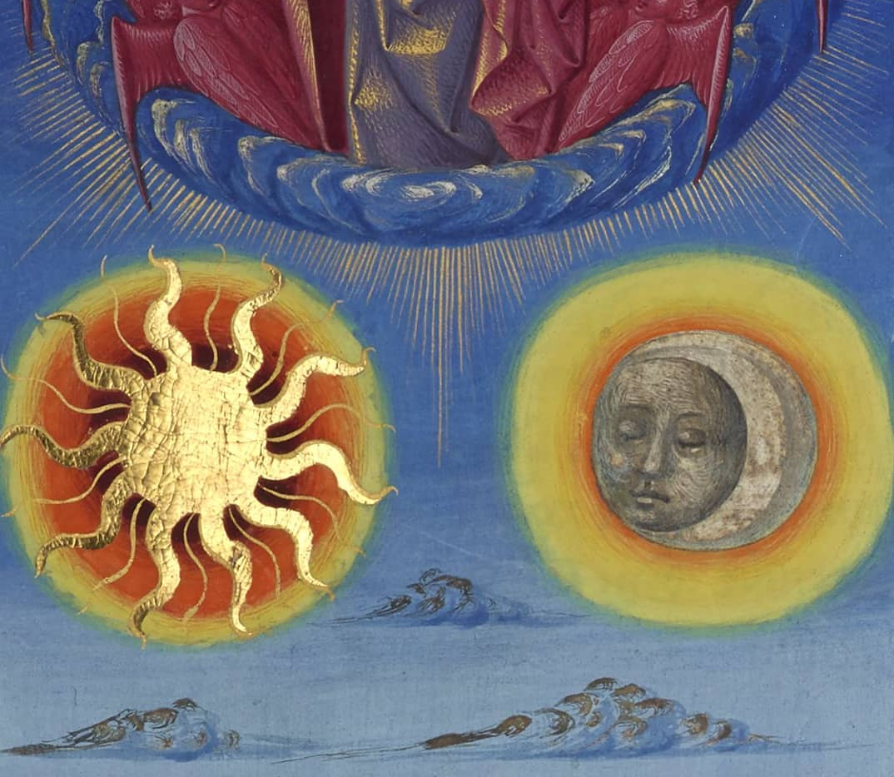
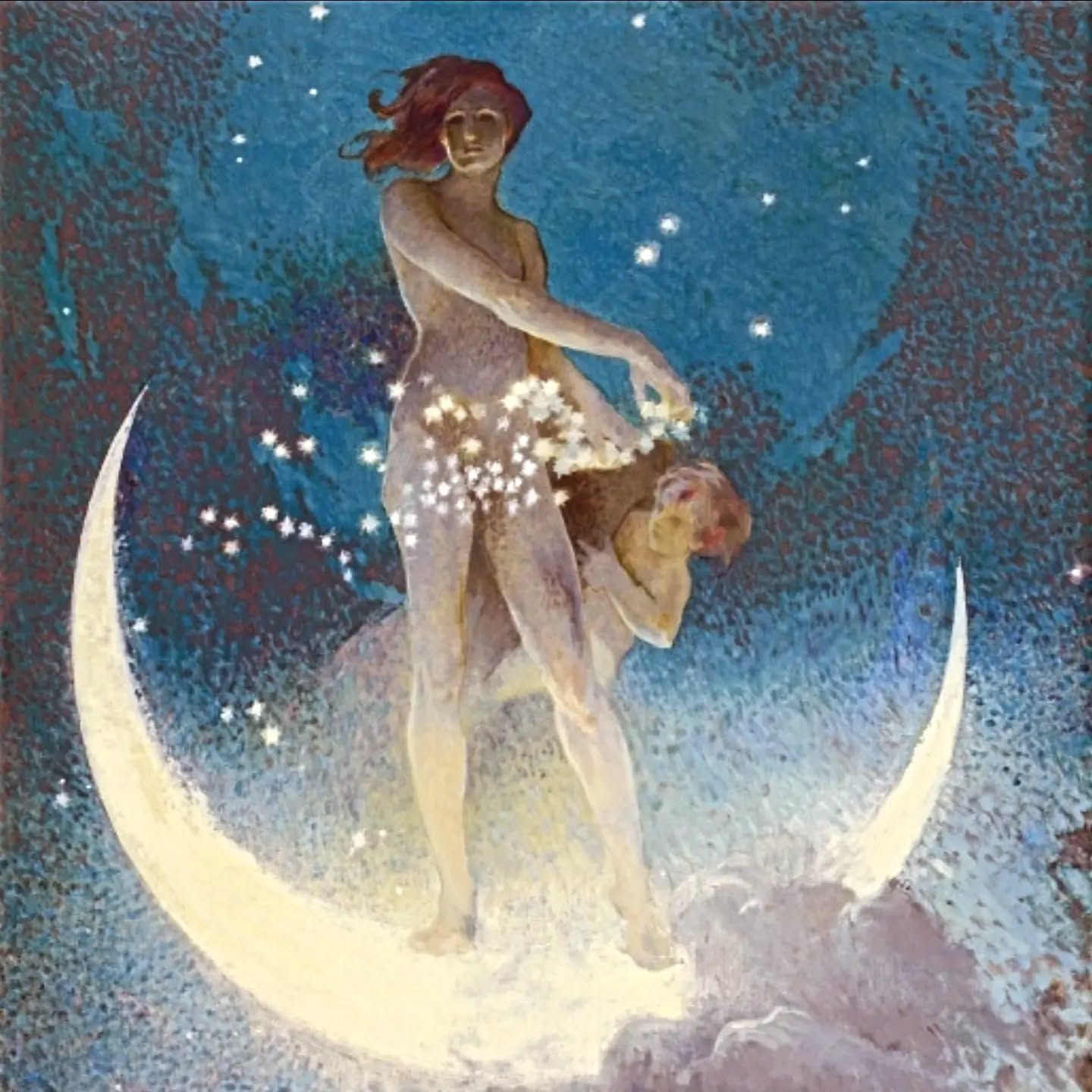
On the 10th of October, at 17:50 in Amsterdam, there will be an exact conjunction of the Sun and Moon in sidereal Virgo, in the lunar mansion Hasta, the last day before the beginning of the nine day rites of passage we know as Navratri.
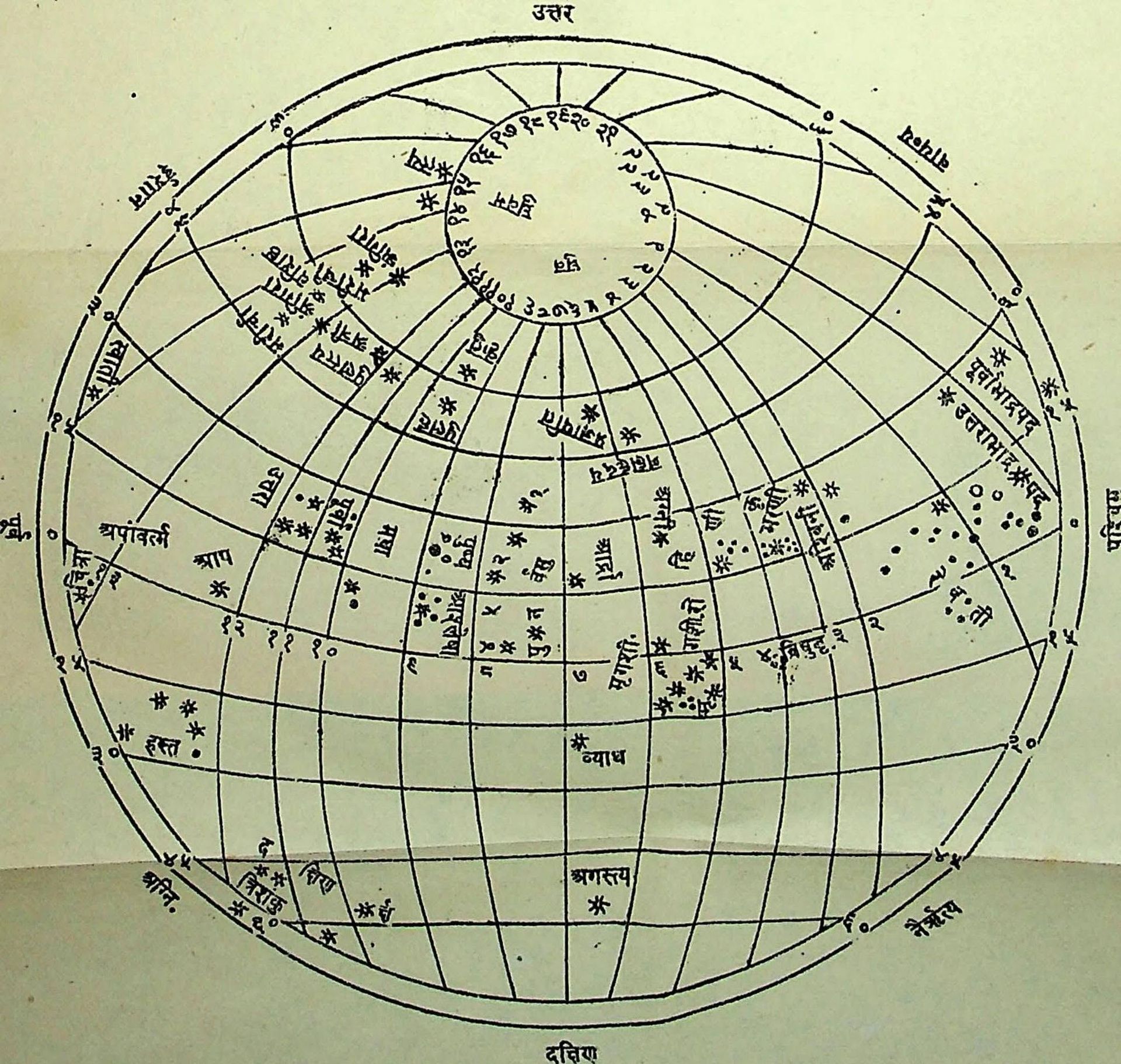
Hasta means hand, and its symbol is a hand or a closed fist. The shakti, or power, of this lunar mansion is the power to gain what we are seeking and place it into our hands: literally creating our own world, materialising our desires. Its basis is seeking to gain and obtaining one's desire. And the deeper desire is for the gods to place their faith in the life we are living. Natives born under Hasta are usually very skilful and crafty with their hands, adept at manual work, and they also carry a healing quality in their hands.
There is a story behind this..
Ravana and the Sun
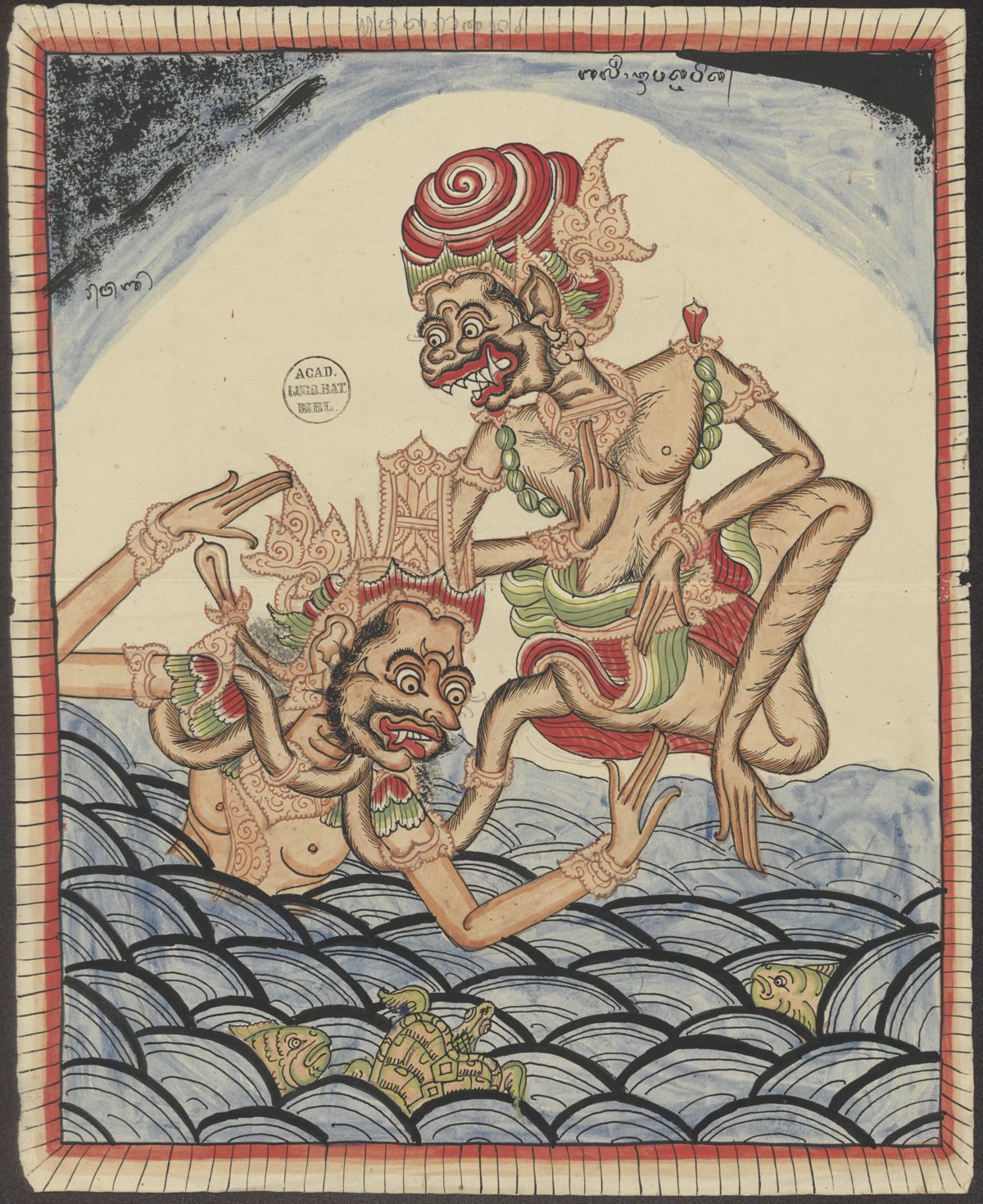
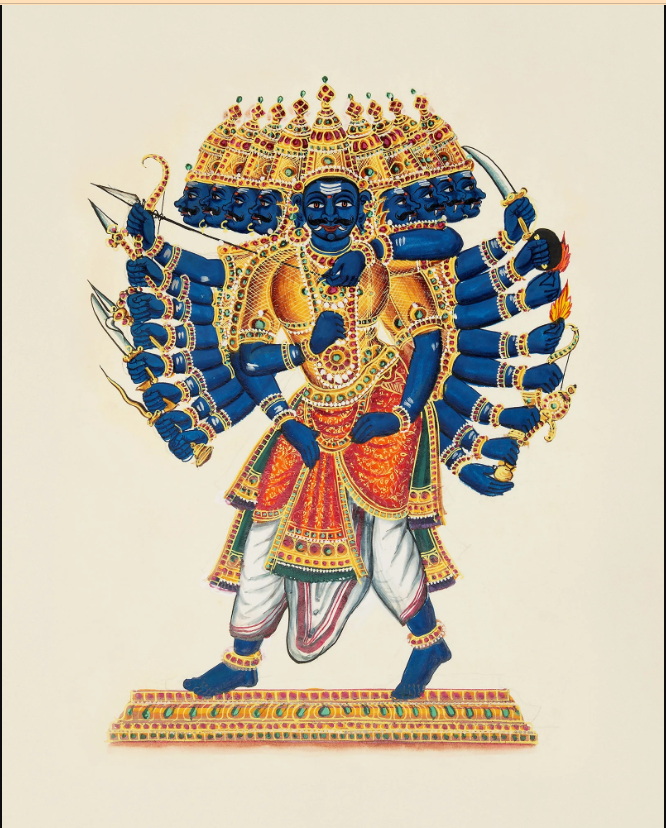
Ravana was travelling to the solar region and stopped to rest at Mount Meru. He got into his Pushpaka, his celestial chariot, in preparation for a battle at dawn. When he saw the sunrise, Ravana called his minister and said: "Go and tell the Sun that Ravana has come to fight. Tell him to either come down and fight with me or admit his defeat." The minister walked towards the Sun and conveyed Ravana's words. The Sun replied: "I have no time. I do not mind whether I defeat or am defeated. The reality is, I am beyond time." When the minister brought this message back, Ravana left, boasting that he had conquered the Sun.
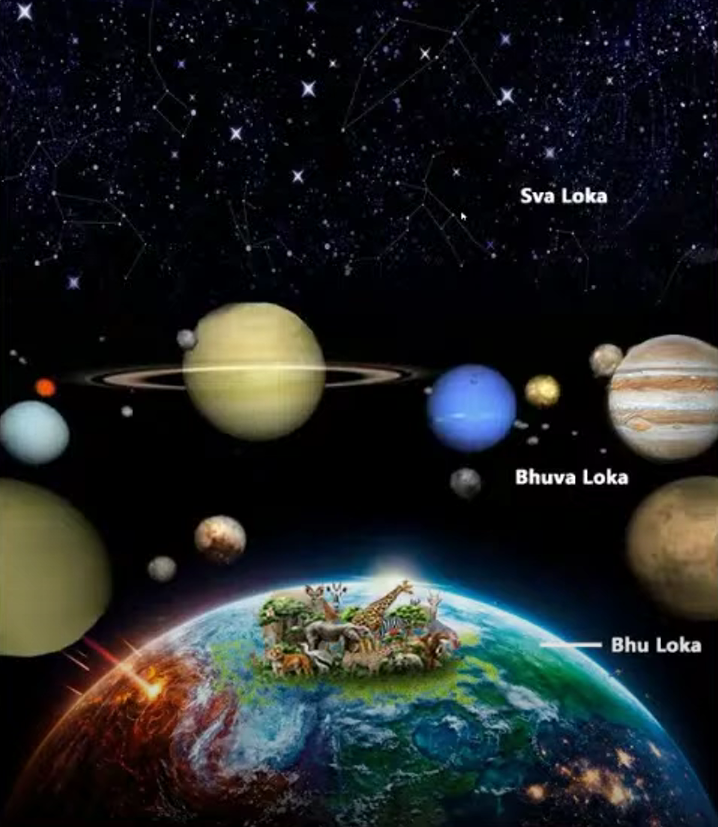
So this story is about different planes of awareness. There is Bhurloka, the earthly realm, where Ravana resides. Above it lies Bhuvarloka, the intermediate space between heaven and earth, where the planets move. And there is Svarloka, the realm of the celestials, the gods and the stars, where the Sun also dwells. In the earthly plane there is such a thing as time, because time is linear there, and therefore there can be a sense of conquest and also a sense of defeat. When we ascend towards Svarloka, however, we enter the realm of omnipresence, just like the Sun. It is not subject to any gain or loss. It simply is.
So during this Amavasya and the coming month, we can look at how we put our practical skills at the service of creating our desires.
Is our desire connected to something infinite, or is it grasping for personal gain?
The gaze of Shani from Revati
This conjunction of the Sun and Moon in Hasta also receives the drishti, the gaze, of Shani. Saturn is retrograde in the nakshatra Revati. Revati means "wealthy". It lies in sidereal Pisces and is the last nakshatra of the nakshatra chakra. Revati wants us to connect to the drum of life and take responsibility for finding divine rhythms and rituals that enhance the power of nourishment. It carries the desire to become lord of the animals: to rise above all other species and become godlike in that way. So we look for a sense of responsibility for our own nourishment. And this is connected to how we put our practical skills at the service of our desires. It means we will have to be very discerning about what we put out into the world.
What are we creating? Does it serve an impermanent, grasping desire, for fame for example, or does it nourish a sense of dharma that is bigger than our own personal gain?
Mercury, Venus and the two malefics
At the same time, there is a strong configuration at the moment of the Amavasya. Mercury and Venus are together, and they receive the fourth drishti of Mars and the ninth drishti of Rahu. Mercury is our communication and our intellect. Venus, moving retrograde, is our ability to relate and to experience harmony, peace and togetherness. Good communication skills - the way we convey our thoughts and ideas - are vital for harmonious relationships and for experiencing balance and harmony in relation to life in general.
The gazes of these two malefic forces are something to be mindful of. We may be extra fiery in the way we communicate. We may put a lot of energy and effort into organising our thoughts and into relating to others, spending time with our relationships.
Mars is debilitated, but it is conjunct Jupiter, which is exalted in Aslesha nakshatra. This conjunction gives Mars extra strength and force, and it enhances the strong need for outgoing, fiery connection. The two malefics, Mars and Rahu, are both connected to Mercury and Venus, each in their own way. Rahu evokes the unconventional drive, enhancing both ambition and strive.
This too needs caution - mindfulness is advised.
From the new moon into the nine nights
Almost at the very moment of the exact conjunction, at 17:49 in Amsterdam, the first tithi of the waxing moon begins: Pratipada of the bright half of Ashvin, the Lunar month. With it, the gate opens to Sharad Navratri, the nine nights of the Goddess, which begin on Sunday 11 October and close on Tuesday 20 October with Vijayadashami, also called Dussehra: the day on which Ravana falls. The story with which this new moon opens finds its resolution in the days that follow. The ego that believed it had conquered the Sun bows, in the end, to the light.
Where Navratri comes from
Navratri means "nine nights". Its central story comes from the Devi Mahatmya, the seven hundred verses also known as the Durga Saptashati, which form part of the Markandeya Purana and were composed around the 5th-6th century CE. The worship of the Goddess it celebrates is far older still.
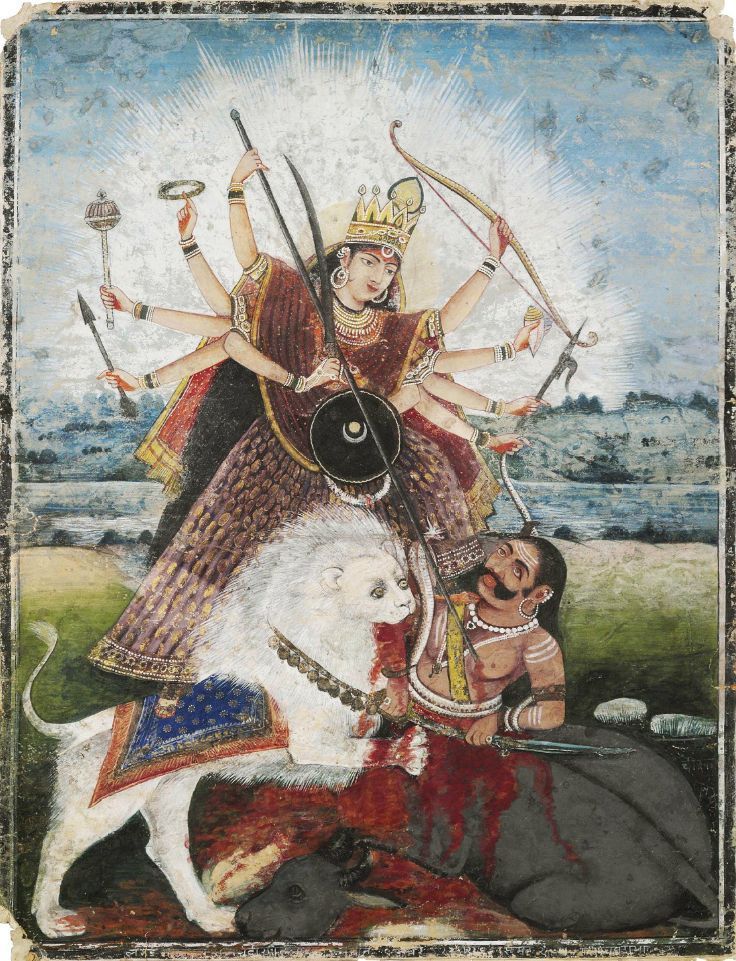
The buffalo-demon Mahishasura had obtained the boon that no man could kill him. He defeated the gods and drove Indra from heaven. The gods then pooled their powers, and from their combined radiance Durga was born. Riding a lion, she fought Mahishasura for nine days and nights and slew him on the tenth. Mahishasura stands for the ego, ignorance, the part of us that wants to rule. Durga is the force that dissolves it.
In the Bengali Krittivasi Ramayana, Rama invokes Durga in autumn before his battle with Ravana. This is called Akal Bodhan, the "untimely awakening", because autumn was considered the night of the gods, when the Goddess sleeps. When Rama found himself one blue lotus short of the 108 he needed for his offering, he was ready to offer his own eye. Moved by his devotion, Durga appeared and blessed him with victory. And in a more intimate version, these nine days are when the Goddess, as Parvati, is allowed to return home to visit her mother.
Why at the turning of the seasons
Spring and autumn are called the "teeth of Yama", the god of death: seasons that are hard to pass through, when illness strikes and the body is vulnerable. That is why the Goddess is to be honoured precisely then. In Ayurvedic terms, this is ritusandhi, the junction between seasons, when we need to cleanse, slow down and realign. The fasting during Navratri belongs to this same wisdom.
Three times three nights
The nine nights are often read as a journey in three stages. The first three belong to Durga, who destroys what obstructs us (tamas). The middle three belong to Lakshmi, who brings abundance and beauty (rajas). The last three belong to Saraswati, who brings knowledge and wisdom (sattva). It is a movement from darkness to light, from ignorance to knowledge, from ego to surrender.
The nine goddesses
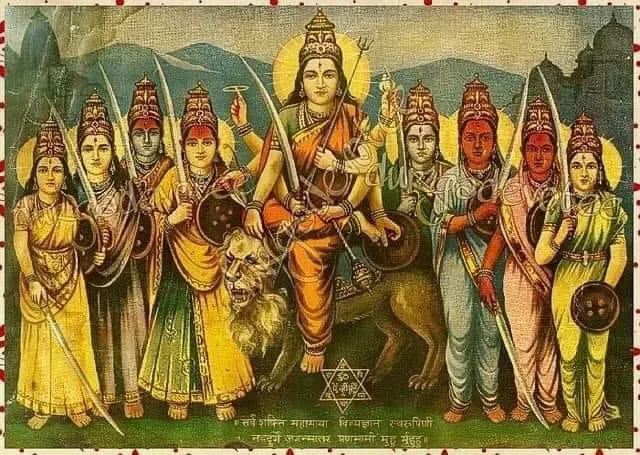
Each night, one of the nine forms of Durga, the Navadurga, is honoured:
- Day 1 - Sunday 11 October - Shailaputri (orange). Daughter of the mountain, Parvati reborn as the child of the Himalaya. She brings grounding, faith and devotion: the firm earth beneath the journey.
- Day 2 - Monday 12 October - Brahmacharini (white). She who walks the sacred path, holding a rosary and a water pot. Discipline, tapas, the commitment to practice.
- Day 3 - Tuesday 13 October - Chandraghanta (red). She with the half-moon bell on her forehead. Courage and serenity; peace in the midst of turmoil.
- Day 4 - Wednesday 14 October - Kushmanda (royal blue). "The small warm cosmic egg": she who smiled the universe into being and dwells in the Sun. Creative power.
- Day 5 - Thursday 15 October - Skandamata (yellow). Mother of Skanda, the warrior god. Strength and tenderness united; she nourishes what is good in us.
- Day 6 - Friday 16 October - Katyayani (green). The warrior who slays the buffalo-demon. Righteous anger, the fierce determination to stand for what is right.
- Day 7 - Saturday 17 October - Kalaratri (grey). The night of time and death, the fiercest form. She dissolves ignorance and ego; her darkness is the void before creation. Yet she is also called Shubhamkari, "she who does good".
- Day 8 - Sunday 18 October - Mahagauri (purple). The great white one. Purity and the cooling grace that follows Kalaratri's fire.
- Day 9 - Monday 19 October - Siddhidatri (peacock green). The giver of perfections. Self-realisation, the completion of the journey.
A note on the colours
Wearing a different colour each day has become a beloved custom, but it is not an ancient one. The colour of the first day follows the weekday on which Navratri begins, and the rest follow a fixed cycle; this year Navratri starts on a Sunday, the day of Surya, so we open with orange. The link to the planetary rulers of the weekdays only partly matches Jyotish, though: Mercury's Wednesday is royal blue rather than green, and Venus's Friday green rather than white. So wear the colours with joy, but know they belong to the day, not to the goddess.
In closing
This new moon asks us to look at our hands. Hasta reminds us that we have the power to shape our world, to grasp what we seek and give it form. But Ravana's challenge to the Sun shows the shadow side of that power: the urge to conquer, to win, to possess. The Sun simply answers that it is beyond time.
With Shani gazing from Revati, we are asked to be discerning about what we create and whether it truly nourishes. And with Mars and Rahu fixing their gaze on Mercury and Venus, we are asked to watch how fiercely we speak and how we relate.
Then, almost at the very moment of the conjunction, the nine nights of the Goddess begin. Night by night, from Shailaputri's grounding to Siddhidatri's completion, Navratri traces the same movement this new moon invites: from darkness to light, from grasping to surrender. On the tenth day Ravana falls, and the ego that thought it had conquered the Sun bows to the light.
The new moon prepares the ground, and the morning after, the seed is planted: Navratri opens with barley sown in sacred earth, to sprout over the nine nights. So perhaps the question for these coming weeks is a simple one: what are we placing in our hands, and in whose service?
Thanks for reading.
Happy Descending, xx Melanie
100726
Sources
- Devi Bhagavata Purana, Book 3, Chapter 26 (trans. Swami Vijnanananda)
- Shlokam, "Navadurga Stotram" - shlokam.org/navadurga-stotram
- Brhat, "Śailaputrī | Navadurgā - Part 1" - brhat.in/dhiti/shailaputri
- Wikipedia, "Akalabodhana" - en.wikipedia.org/wiki/Akalbodhan
- Drik Panchang, "Navratri Nine Colors" - drikpanchang.com/navratri/colors/navratri-nine-colors.html
- Shubh Panchang, "Navratri 2026: Date, Tithi, Puja Vidhi" - shubhpanchang.com/festivals/navaratri-prarambh
- Rampuri, "Navratri Durga Puja 2026: Dates & Pujas" - rampuri.com/happy-navratri/