Contemplations on Spirit
'In this blog I contemplate the means to understand one self and the motivation that moves us to unfold in heart and soul.'
The Golden Fleece (part 1) -
The Field of Ares
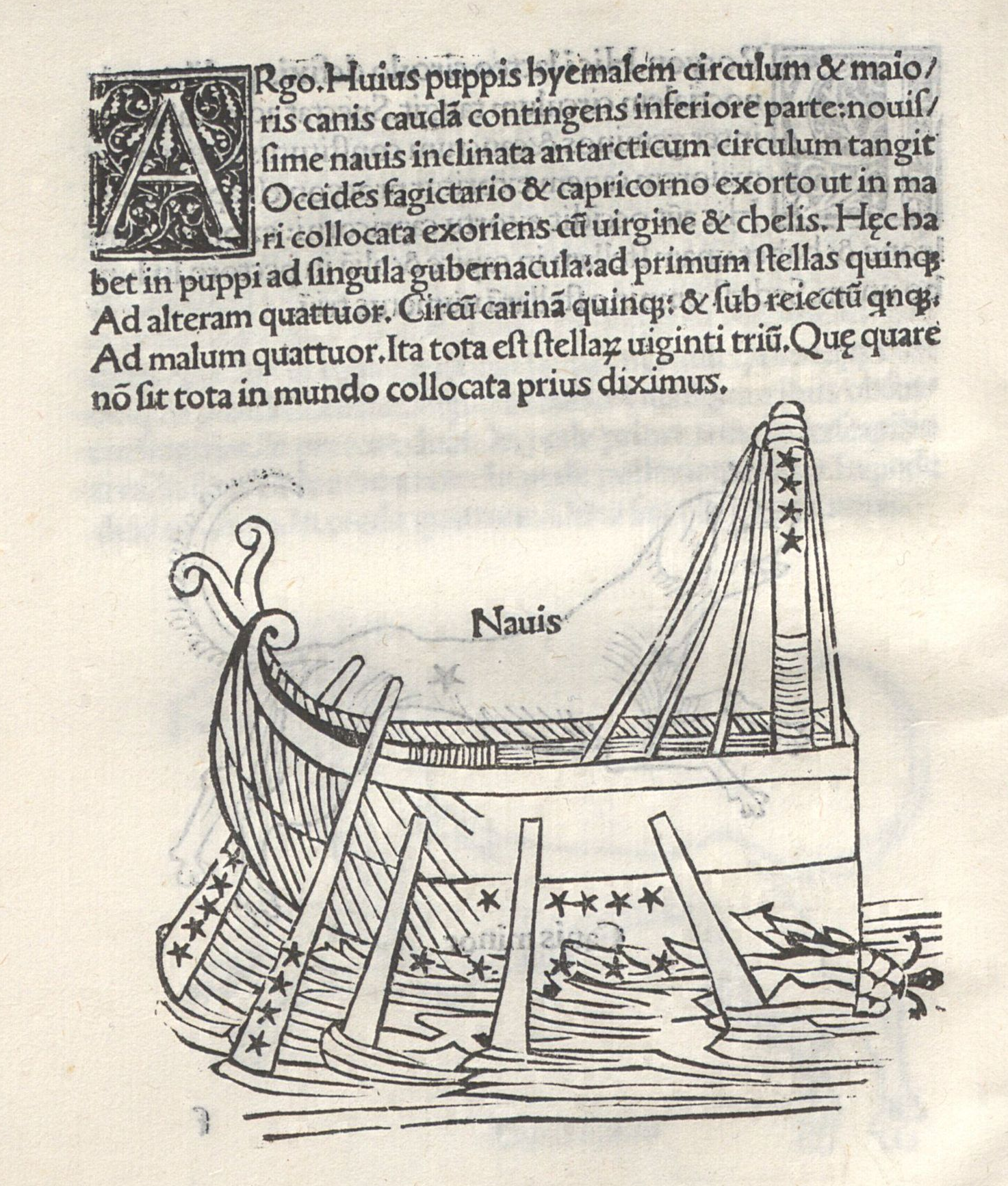
This autumn the sky is telling a story that has been passed down for almost three thousand years: the voyage of Jason and the Argonauts to the Golden Fleece. The Argonauts are a band of some fifty Greek heroes, named after their ship, the Argo. Their goal is Colchis, a land on the eastern shore of the Black Sea, in what is now Georgia. We are already in the middle of the story. The ship has sailed, the coast of Colchis is in sight. This first part is about the departure and about sowing. The second part, in mid-November, is about the fleece itself.
The ram and the man with one sandal
Long ago, a ram with a golden fleece carried two children away from a stepmother who wanted them dead. The animal could fly. The girl, Helle, fell into the sea on the way; that sea has been called the Hellespont, the Sea of Helle, ever since. The boy, Phrixus, reached Colchis, the land of King Aeetes, a son of the sun god Helios. There the ram was sacrificed and its fleece hung in an oak tree, in the sacred grove of Ares, the god of war. A dragon that never sleeps has guarded it ever since.
Generations later, a young man appears in the Greek city of Iolcus wearing only one sandal; the other got stuck in the river. King Pelias is startled. He has seized the throne that rightfully belonged to his brother, and an oracle had warned him: beware of a man with one sandal. That man is his brother's son. Pelias sends him away on a mission from which no one returns: fetch the Golden Fleece.
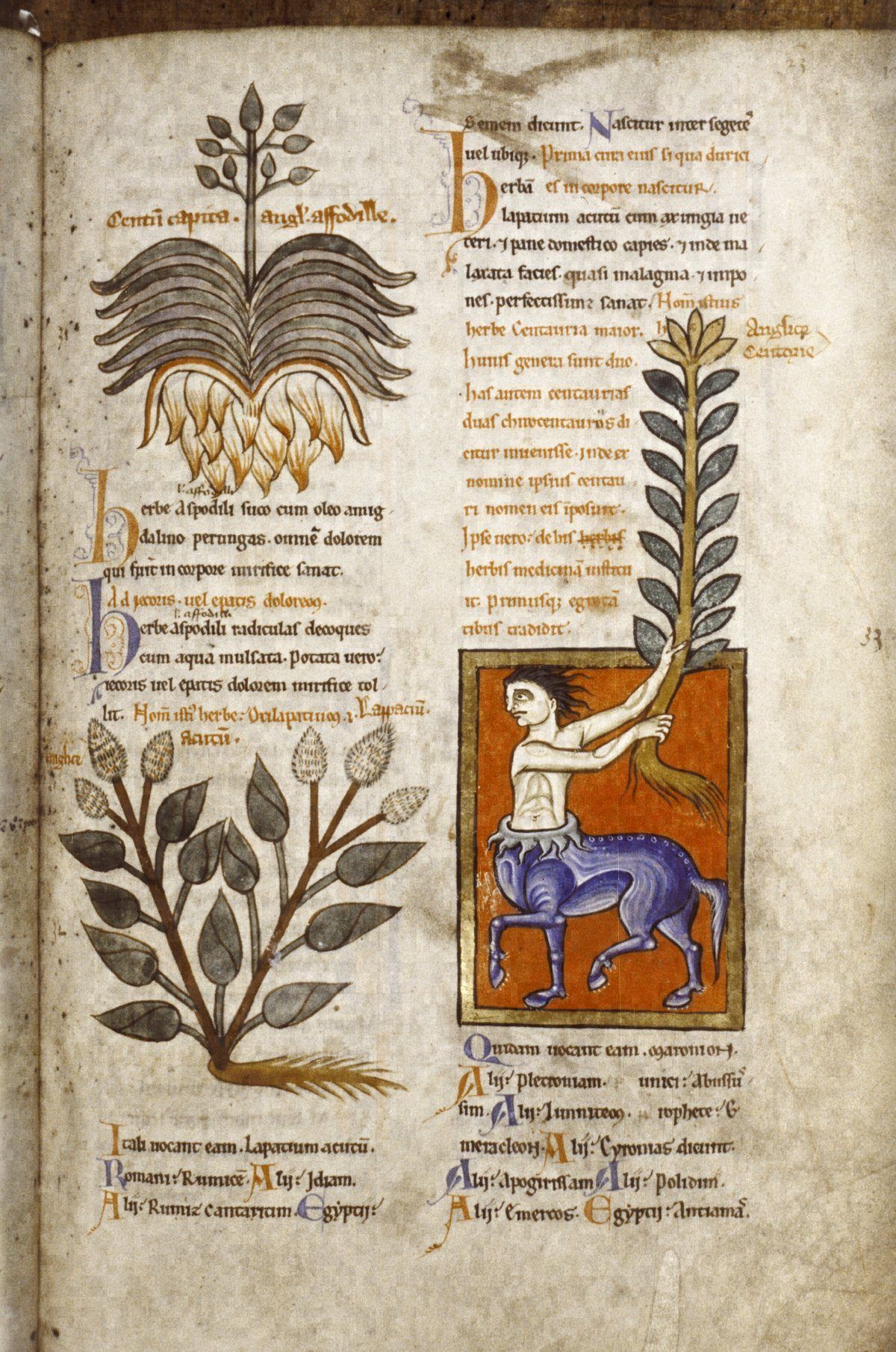
The young man's name is Jason. He was raised in a cave on Mount Pelion by the centaur Chiron: half man, half horse, and unlike the other centaurs wise, gentle and skilled in medicine, music and astronomy. Chiron was the teacher of many Greek heroes. According to the poet Pindar, he also gave Jason his name. Iasōn comes from the Greek word for healing. The pupil of the wounded healer carries healing in his name.
That relationship is in the sky right now. In astrology, Chiron is a small celestial body between Saturn and Uranus, named after the centaur. On 17 September Chiron moved back into the sign of Aries, the sign of the fleece's animal, for one last round before leaving Aries for fifty years. On 29 September Mars entered Leo, the sign of the Sun, the realm of Aeetes. Jupiter and the South Node were already waiting there.
The South Node is not a planet but a point: one of the two places where the path of the Moon crosses the path of the Sun. In old astrology these two points were called the head and the tail of the dragon. The South Node is the tail.
Together, these three ask for something unusual. Mars wants to act, powerfully and visibly. Jupiter brings vision, knowledge and wisdom. And the South Node adds something that is hard to explain: an intuitive knowing that comes from deeper layers, often without your being able to say where it comes from. Carrying vision and knowledge out into the world with force, but from intuition. That is not always easy to place, neither for yourself nor for the people around you.
Yet whoever is willing to speak and act from that intuitive knowing can reach real depth precisely through it. And Chiron stands in a trine to the South Node, a harmonious aspect of 120 degrees. He turns it into a healing process.
The psychiatrist Carl Gustav Jung wrote about the wounded physician: only one who is wounded can truly heal. Chiron is that image incarnate. He was immortal, but was accidentally struck by a poisoned arrow and received a wound that never closed. He cannot go himself. He can shape someone who goes. When the Argo sets sail, he comes down the mountain into the surf to bless the crew. He had also advised Jason to take the singer Orpheus along. That advice will later save their lives.
The sky behind the story
Behind this foreground story stand the three outermost planets, which move so slowly that they stay in roughly the same position for months or years. Uranus in Gemini, Neptune at the start of Aries and Pluto in Aquarius form a closed triangle of harmonious aspects all autumn: two sextiles of 60 degrees and a trine of 120 degrees. Uranus and Pluto become exact on 29 November.
Anyone who reads Apollonius of Rhodes, the Greek poet who set the story down in the third century BCE, meets all three of these planets everywhere.
In astrology, Pluto rules the underworld, death and transformation. As Jason approaches the palace of Aeetes, he walks past trees from which the dead are hanging, wrapped in untanned hides. In Colchis men are not buried. The underworld literally hangs in the trees along the road.
Neptune stands for mist, dream and the sea. Hera, queen of the gods and Jason's protector, wraps the heroes in a thick mist so that they can pass through the city unseen. And according to an old tradition, the golden ram was itself a son of Poseidon, the Greek sea god we know as Neptune. This autumn Neptune stands in the sign of Aries.
Uranus stands for sudden renewal and liberation. In modern astrology Uranus is often linked with Prometheus, the titan who stole fire from the gods and gave it to humankind. As punishment he was chained to the Caucasus, where an eagle came every day to eat his liver. On their way to Colchis the Argonauts hear Prometheus screaming and see the eagle fly over the ship. The ointment that later makes Jason invulnerable grows from his blood. Some think this herb may be the autumn crocus, Colchicum, which owes its name to Colchis.
When Aphrodite withdraws
On 3 October Venus turned retrograde. This means that, seen from Earth, she appears to move backwards for a few weeks. On 28 October at 08:34 Venus stood exactly opposite Chiron: 28 degrees Libra against 28 degrees Aries. On 29 November this happens once more, when Venus is moving forward again.
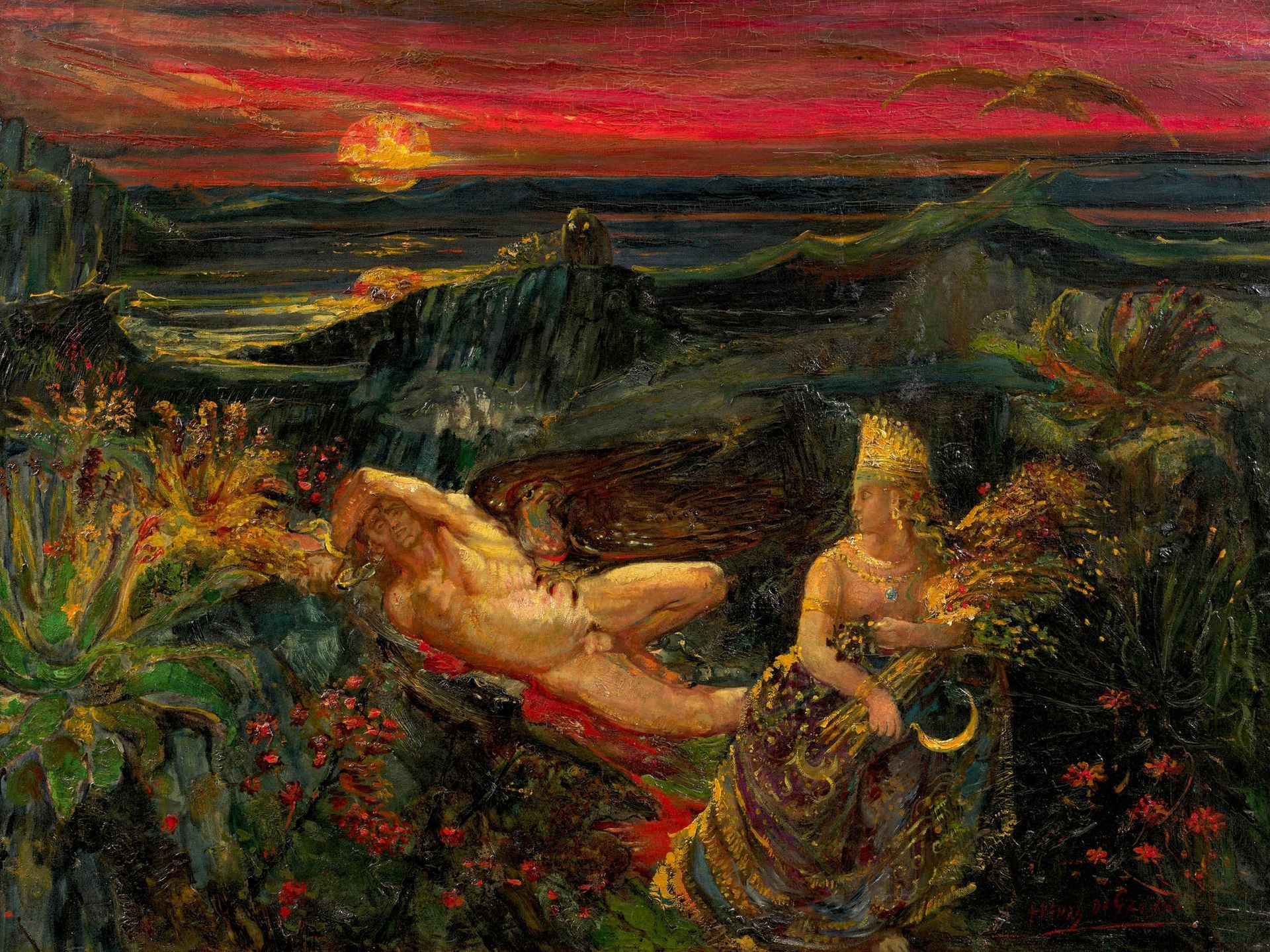
While the Argonauts lie hidden in the reeds of the river, Hera and Athena, the goddess of wisdom, realise they can do nothing. No strength, no cunning will work against Aeetes. There is only one goddess who can do it: Aphrodite, the goddess of love, whom the Romans called Venus. Her son Eros must strike the king's daughter with his arrow. Medea, priestess of Hecate, the goddess of the night, of magic and of crossroads. Medea knows every herb.
And there they stand, opposite each other. Chiron, who shaped Jason, and Aphrodite, who gave him Medea. Without the one, Jason would never have become a hero. Without the other, he would never have won the fleece.
Both carry a wound. Chiron, who does not heal. And love, which Apollonius calls "a great bane to mankind". Eros shoots and laughs, and in Medea the arrow smoulders like a flame beneath the ashes.
The field of Ares - new moon 9 November
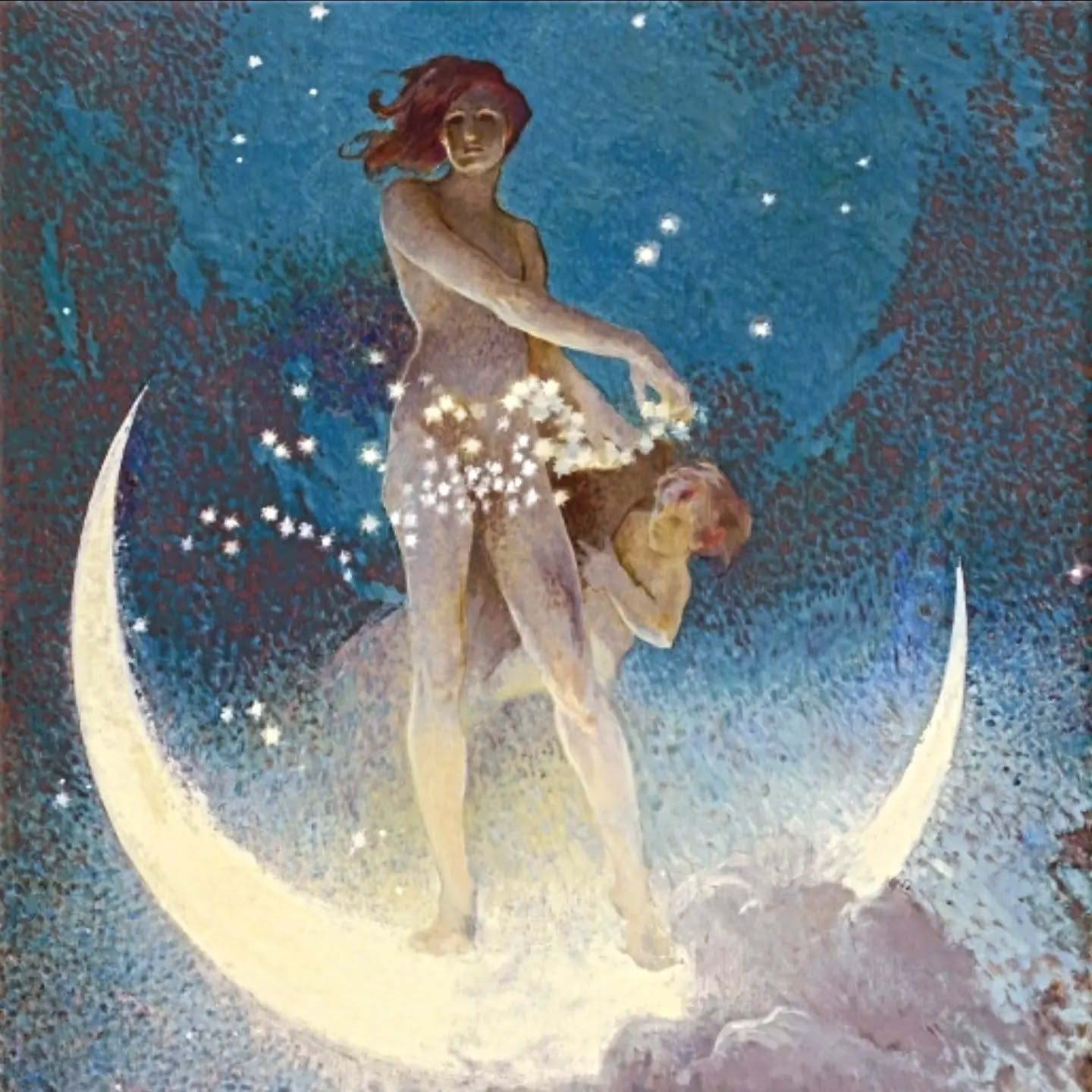
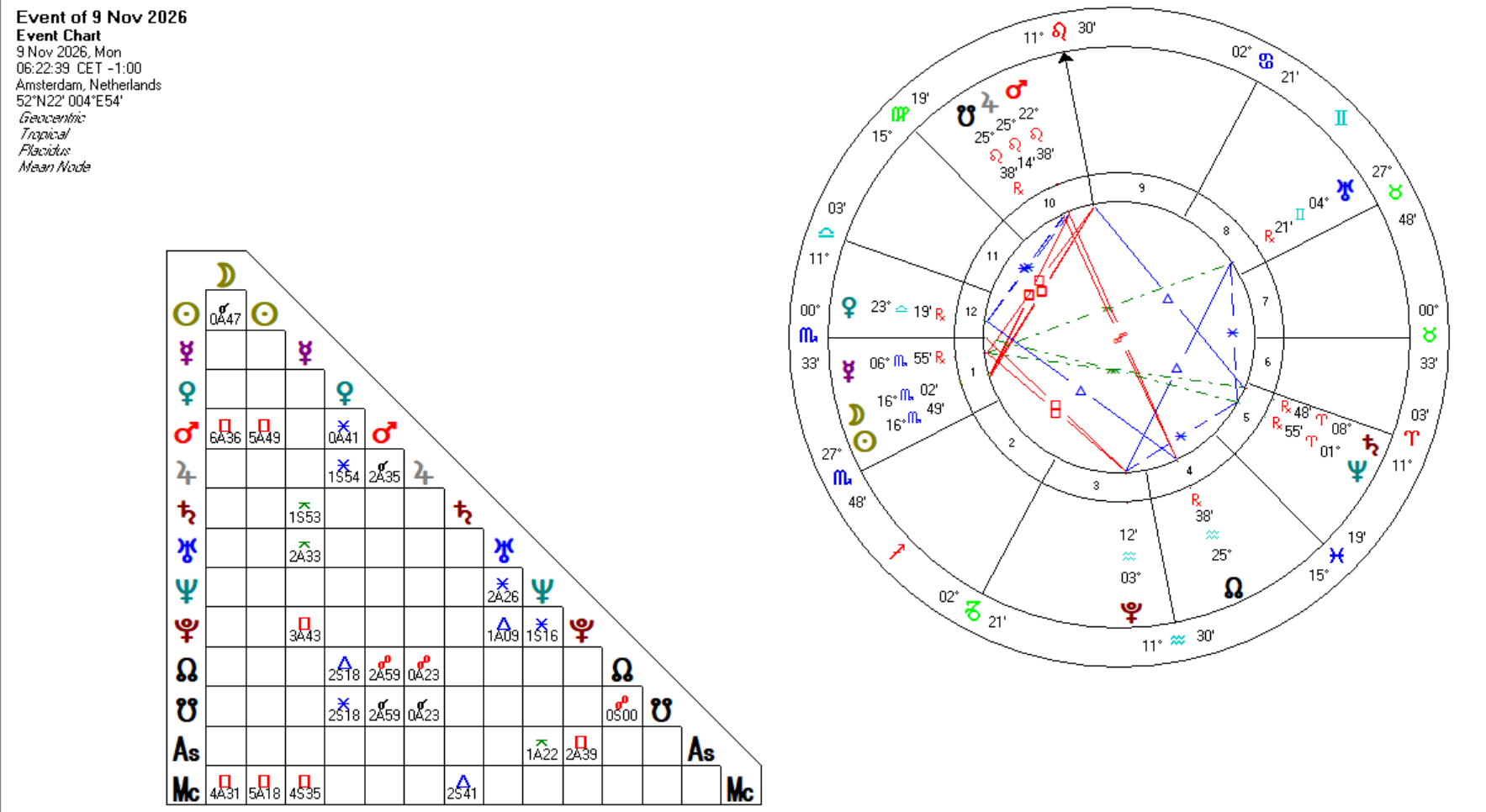
At a new moon the Sun and Moon stand in the same place in the sky and the Moon is invisible. Traditionally it is a moment to begin something new, to sow. On 9 November at 08:02 there is a new moon at 16°53 Scorpio in the Tropical Zodiac. Scorpio is the nocturnal sign of Mars, and Mars itself squares it from Leo, on its way to the dragon. A square of 90 degrees is an aspect of tension: it calls for action. Mercury is retrograde in the same sign. Venus has not yet turned.
So this is a new moon of "not yet". And that is exactly when sowing happens.
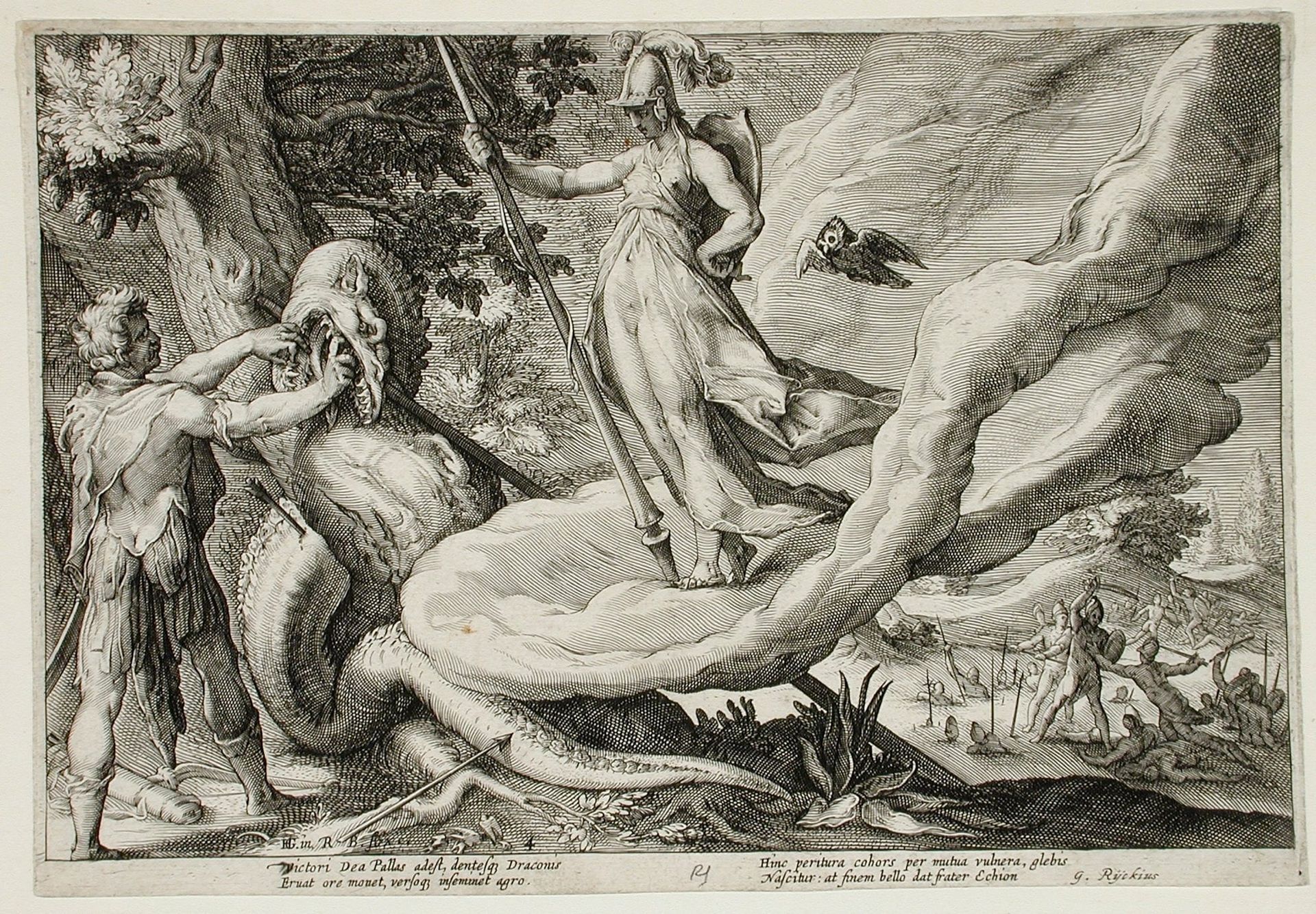
Aeetes sets Jason a task he performs himself as well. Bring my two bronze-hoofed, fire-breathing bulls under the yoke. Plough the field of Ares. And sow in it, says the king, "not the seed of Demeter", the goddess of grain, "but the teeth of a terrible serpent". From those teeth armed men grow. They must be defeated before evening.
Medea tells Jason what to do. Wait until midnight. Bathe alone in the river. Put on dark clothing. Dig a round pit, sacrifice a ewe and pour out honey for Hecate. And then walk away without looking back, whatever you hear: footsteps, barking dogs.
Jason does it. Hecate rises from the depths, entwined with snakes among oak branches, surrounded by torches and the hounds of the underworld. He is afraid. He does not look back.
In ancient Athens Hecate was honoured precisely at the new moon, with a meal called her deipnon that was left out at crossroads. The dark moon is her time.
At sunrise Jason ploughs. He sows the dragon's teeth in the furrows and keeps looking back, so that the harvest does not rise against him too soon. Castor and Polydeuces, the twin brothers on board after whom the constellation Gemini is named, hand him the yoke.
This is what this new moon is about. Sowing is giving direction. Bringing wild bulls under the yoke. Drawing a straight furrow through hard ground. And you cannot always choose what you sow. Sometimes you sow dragon's teeth: old fears, old conflicts, split-off parts of yourself. Jung called them complexes: charged cores in the psyche that behave as if they had a will of their own. They rise like independent warriors, armed, and turn against the one who sowed them.
Medea teaches - in this case - to throw a stone into their midst. Then they fight each other, not you.
What is still to come
Four days after the new moon, on 13 November, Mercury and Venus both start moving forward again. Hermes, the messenger god who gave the golden ram, and Aphrodite, who gave Jason Medea: the two helpers from the myth come back into motion.
On 12 November Jupiter meets the South Node. On 14 November Mars follows. On 16 November Mars and Jupiter stand together at 25 degrees Leo, on the tail of the dragon. You can see them then in the east before sunrise, close together.
Notice what happens in the myth at that point. Jason does not win the fleece with his own knowledge. He acts on what Medea gave him in the dark: a knowing that comes from the night, from Hecate, and that he himself cannot explain. Yet he has to carry it out with his own hands, in full view of Aeetes and the whole people of Colchis. Acting with force on a knowledge you cannot justify. That is exactly what Mars and Jupiter on the South Node ask of us.
And Chiron watches from Aries. He reminds us that this is not only about winning, but about healing. About bringing back what was once carried away.
That is what part 2 is about.
In closing
For a long time I kept Chiron out of my work. This autumn he can no longer be ignored. He stands in the sign of Aries, looks towards Leo, and waits for his pupil.
So here is a question for the coming new moon:
What will you sow on 9 November, and which bull must first be brought under the yoke?
What knowing have you carried with you for a long time, without daring to speak it?
Thanks for reading xx
110326 Melanie
Sources:
Images found at Sourcelibrary.org
Apollonius of Rhodes, Argonautica, books 1-3 (1574 edition, Source Library); Pindar, Pythian Ode 4.
Positions calculated with the Solar Fire 9