Contemplations on Spirit
'In this blog I contemplate the means to understand one self and the motivation that moves us to unfold in heart and soul.'
Samhain,The Night the Hill Opens
The Myth: Nera and the Open Hill
The Myth: Nera and the Open Hill
In the palace of Cruachan, King Ailill and Queen Medb are celebrating the feast of Samain. Outside it is dark and cold. Two men executed the day before hang from a tree. They are left there until the night has passed, for on Samain you do not touch the dead. On that night the demons are loose and the people of the sídh roam all of Ireland. Whoever is found near a body risks being taken.
To test the courage of his warriors, Ailill offers a prize: his own gold-hilted sword, for anyone who dares to go outside and tie a band of twisted twigs around the foot of one of the hanged men. One after another they return, driven back by what roams there in the dark. Only Nera succeeds.
But that is where his adventure truly begins. The dead man speaks to him. He is thirsty, and Nera must carry him on his back until they find water. In a strange house the dead man drinks, and the last sip he spits out kills everyone inside. Nera carries him back to the tree. Back at Cruachan he sees a procession entering the cave, for around Samain the fairy mounds of Ireland stand open. Nera follows them.
Beneath the hill he finds a palace of the Tuatha Dé Danann, the old divine people who went to live in the hills. He is brought before the king, made to serve the people of the sídh, and marries one of their women. She tells him two secrets. The first: in a well near the palace lies the king's golden crown, hidden. The second: the sídh plans to attack Ailill's court on the next Samain.
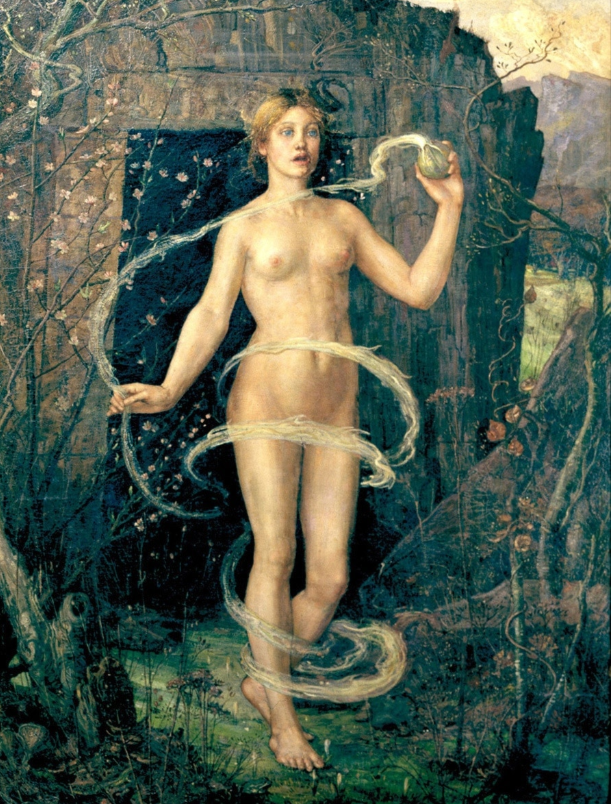
Nera wants to warn his people. But how do you prove you have been to the other world? "Take fruits of summer with you," says his wife. He gathers wild garlic, primrose and golden fern. And so, in the middle of winter, he stands in Cruachan again with summer in his hands.
A year later, on the next Samain, the men of Connacht march into the open hill and plunder it. They carry off the crown from the well. But Nera does not return with them. He stays with his wife and his people beneath the hill, and according to the tale he will not come out again until Doomsday.
A Story about Thresholds
Read through Jung's eyes, this is a descent into the unconscious. The dead who must not be touched are what we would rather leave hanging: the unprocessed, the repressed. Yet this is exactly where the hero must begin. Only the one who touches the dead, carries him and quenches his thirst can enter the hill.
Beneath the hill the anima is waiting: the woman of the other world, who knows where the treasure is hidden. She shows Nera the crown in the well, the Self lying in the depths. She also gives him the proof that the other world is real: living summer in the dead time of the year.
The ending says the most. Nera does not return as he left. Whoever truly descends stays there, in part. Samhain asks something of you.
What the People Kept
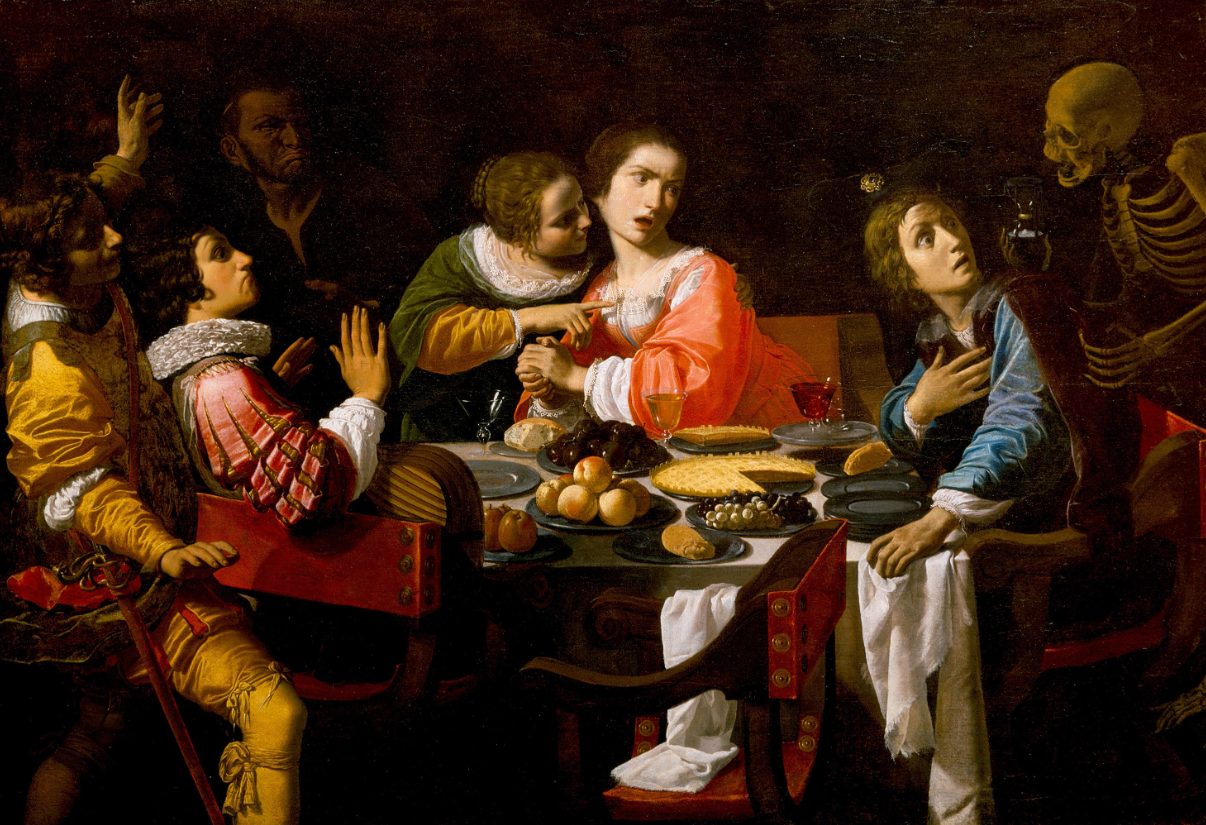
Long after the old gods had vanished into the hills, the motifs of stories like this lived on in what people did on this evening. In the folk customs John Brand collected in 1813, the story of Nera still echoes, even if almost no one knew it anymore.
Feeding the dead. Nera's dead man was thirsty and had to be given drink. In Ireland the best food was set on the table on this evening in memory of someone who had died, and prayers were said for the soul of the one who had provided it. The dead came to visit, and you do not let a guest go hungry.
Fruit as proof from the other world. The summer fruits proved that Nera had been beneath the hill. In the customs, apples and nuts become carriers of knowledge about what is hidden. In the north of England the evening was even called Nutcrack Night: young people dived for apples in a tub or tried to catch them with their teeth. In Ireland nutshells were burned and the future read in the ashes.
The bride on the other side. Nera found his wife in the other world. The love oracles of this night do the same: you look for your future beloved beyond the ordinary. Two hazelnuts were given the names of lovers and thrown into the fire. If they burned quietly together, it was a good sign. If one leapt away, it was not. Young women went to bed in silence, without speaking a word, to see the face of their future husband in their dreams.
Crossing the boundary. In Scotland people went to places that are thresholds in themselves. You dipped your left sleeve in a stream at the point where the lands of three lairds meet, or you fathomed a haystack three times in the dark. In such a place, on such a night, you could see what you would not see otherwise.
Light on the hill. In Buchan and elsewhere, fires were lit on high ground to bring the harvest safely home. The hill that opens and the fire that burns upon it are two images of the same night: the moment when light and darkness touch.
Borlase compares Samain with the great festivals of the dead in the Shinto temples of Nikko, Japan. And how about Día de Los Muertos in Mexico. There thousands of lanterns are lit, each for the spirit of an ancestor. There was masquerading and revelry to entertain the visiting spirits. On the other side of the world people kept the same night: the dead come home, and we light a light for them.
Mercury Descends
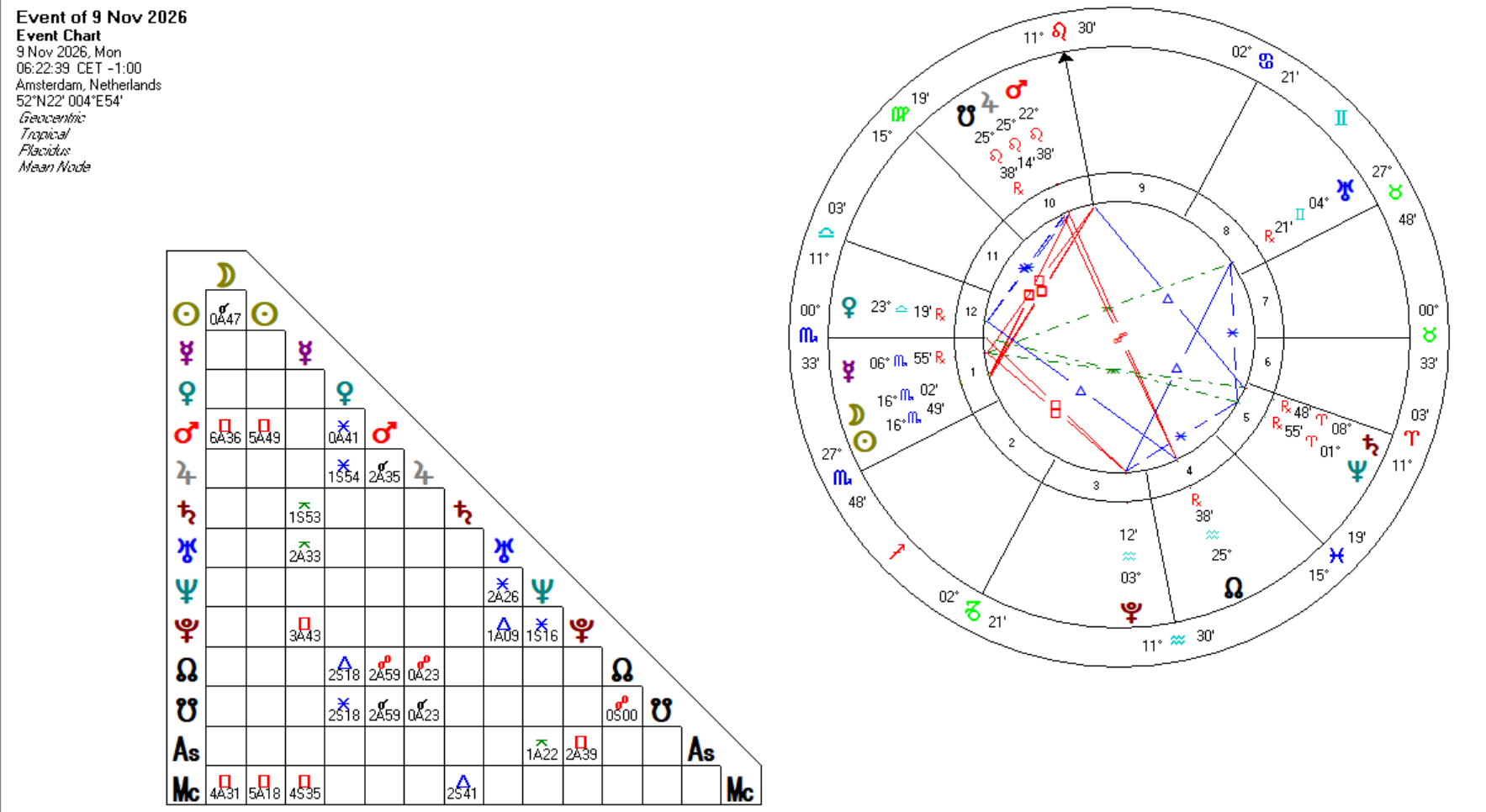
On 23 October the Sun entered tropical Scorpio, and with it begins the season of the depths. A day later, on 24 October, Mercury turned retrograde at 20°59' Scorpio. Until 13 November he moves back to 5°02', without leaving the sign even once.
In my previous blog on Zlatovláska I described Mercury as the messenger between worlds. Hermes had another task that weighs more heavily here: he was the psychopomp, the guide of souls into the underworld. Look at Nera again. The first thing he does, once the band of twigs is tied, is take a dead man on his back and carry him through the night. Nera is a Mercurial figure: he moves back and forth between the world of the living and that of the dead, carrying messages from one side to the other.
This year Mercury makes that descent himself, in the sign of the depths, in the very weeks of Samhain. The midpoint is the cazimi on 4 November, when Mercury stands at 12° Scorpio in the heart of the Sun. That is the moment Nera enters the palace beneath the hill: in the deepest dark, the messenger meets the light. Astronomical Samhain, the point exactly between autumn equinox and winter solstice, falls around 7 November at 15° Scorpio. Two days later comes the new moon at 16° Scorpio, with Mercury still retrograde. This year the hill stays open a little longer than one night.
The Fruit You Carry Back
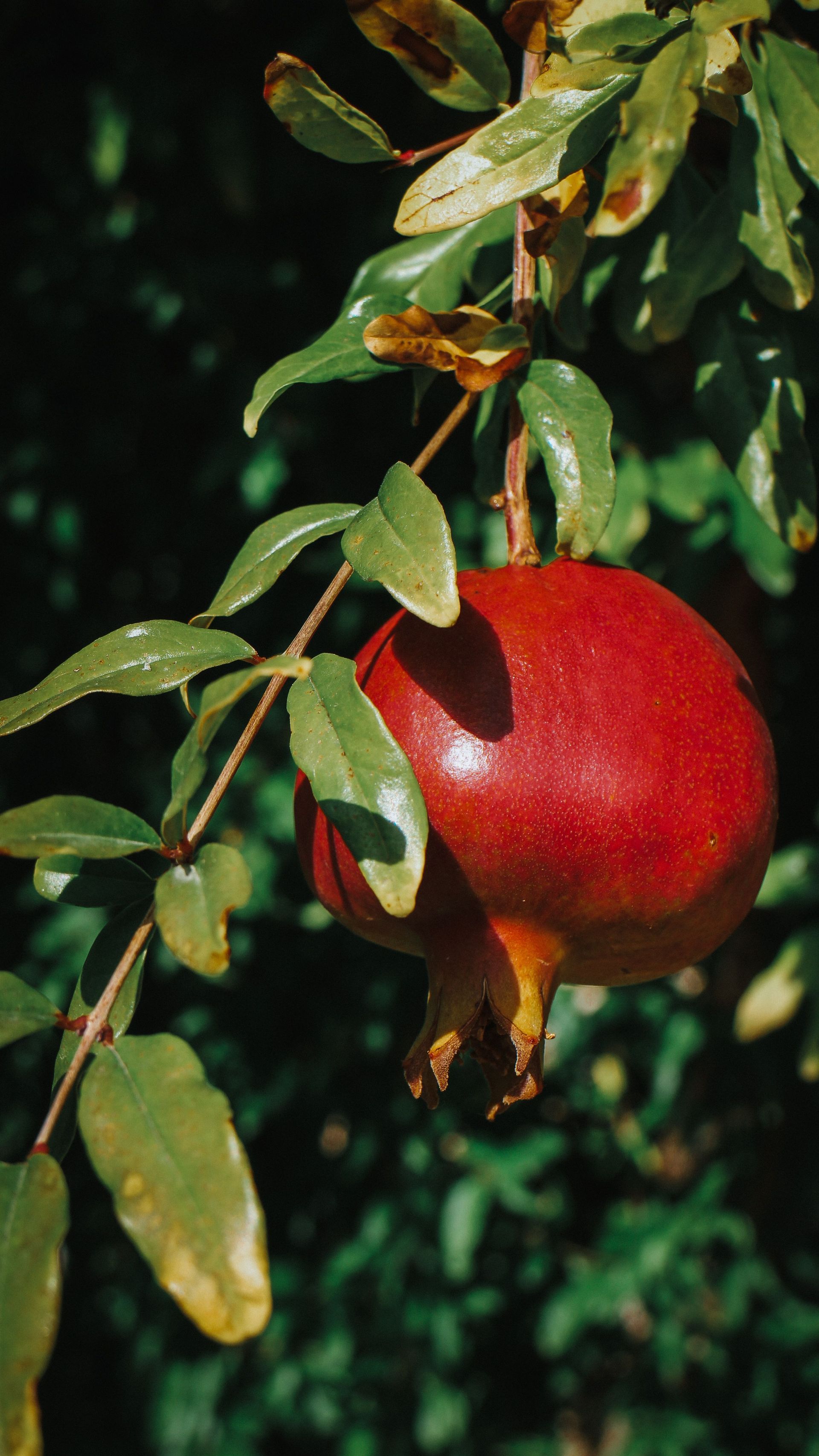
In modern astrology Scorpio is ruled by Pluto. In The Chain of Desire I wrote about Persephone and the pomegranate seed. Whoever eats in the underworld can never fully return. In Nera's story that motif is turned around. He does not eat from the underworld; he carries fruit out of it: wild garlic, primrose and golden fern. The summer kept safe beneath the hill, as proof that the other world truly exists. And yet he ends like Persephone. Whoever truly descends leaves part of themselves behind.
The myths of Pluto show three ways to descend. Theseus and Pirithous went down to take something, and stuck fast to the Chair of Forgetfulness. Orpheus went out of love, but looked back at the threshold of the light, and lost. Nera does neither. He does not take, and he does not look back. He enters into a relationship with what he finds below, and he chooses to stay. Ailill and Medb plunder the hill and carry the crown up into the world. Nera stays with his wife and his people. Here too, what I wrote about Pluto holds: he cannot be steered, only received.
Venus Looks Back
Venus, too, is retracing her steps. She has been retrograde since 3 October at 8° Scorpio, squaring Pluto, moved back into Libra on 25 October, and turns direct at 22° Libra in the night of 13 to 14 November, almost together with Mercury. Venus is the planet that unites and reconciles opposites. In the story she is the woman beneath the hill: she shows Nera the hidden treasure and warns him of what is to come. As with Zlatovláska, the woman of the other world is no prize. She is the one who knows.
So Mercury and Venus both ask us to look back. Not like Orpheus, who wanted to check whether the old still followed him, but like Nera: to see what we have carried up from the depths, and what we have left behind there.
Which dead one are you still carrying on your back, and what does he need to find rest? Which fruit of summer have you kept for the dark months? And if the hill stands open these coming weeks, what would you go in to fetch, and what are you willing to leave there?
Thanks for reading xx
Melanie Webb 102626
Sources
Original text
- Echtra Nerai (The Adventures of Nera), Old Irish tale of the Ulster Cycle, preserved among others in the Yellow Book of Lecan (Trinity College Dublin, MS H.2.16). English translation: Kuno Meyer, "The Adventures of Nera", Revue Celtique 10 (1889). Read online
Retellings and folk customs (via Source Library)
- W.Y. Evans-Wentz, The Fairy-Faith in Celtic Countries. London/New York: H. Frowde, 1911, pp. 288-289. p. 288, p. 289
- William Copeland Borlase, The Dolmens of Ireland, Vol. III. London: Chapman & Hall, 1897, pp. 853-854. p. 853, p. 854
- John Brand, Observations on Popular Antiquities, ed. Henry Ellis. London, 1813, chapter "Allhallow Even". p. 334, p. 337, p. 340, p. 341, p. 346
- George Sinclair, Satan's Invisible World Discovered. Edinburgh, 1685, p. 257. p. 257
Astrology
- Solar Fire 9
Previous posts